🔥 Build Your AI-Powered Dream Software -- Chat with an Expert!

Contact Us

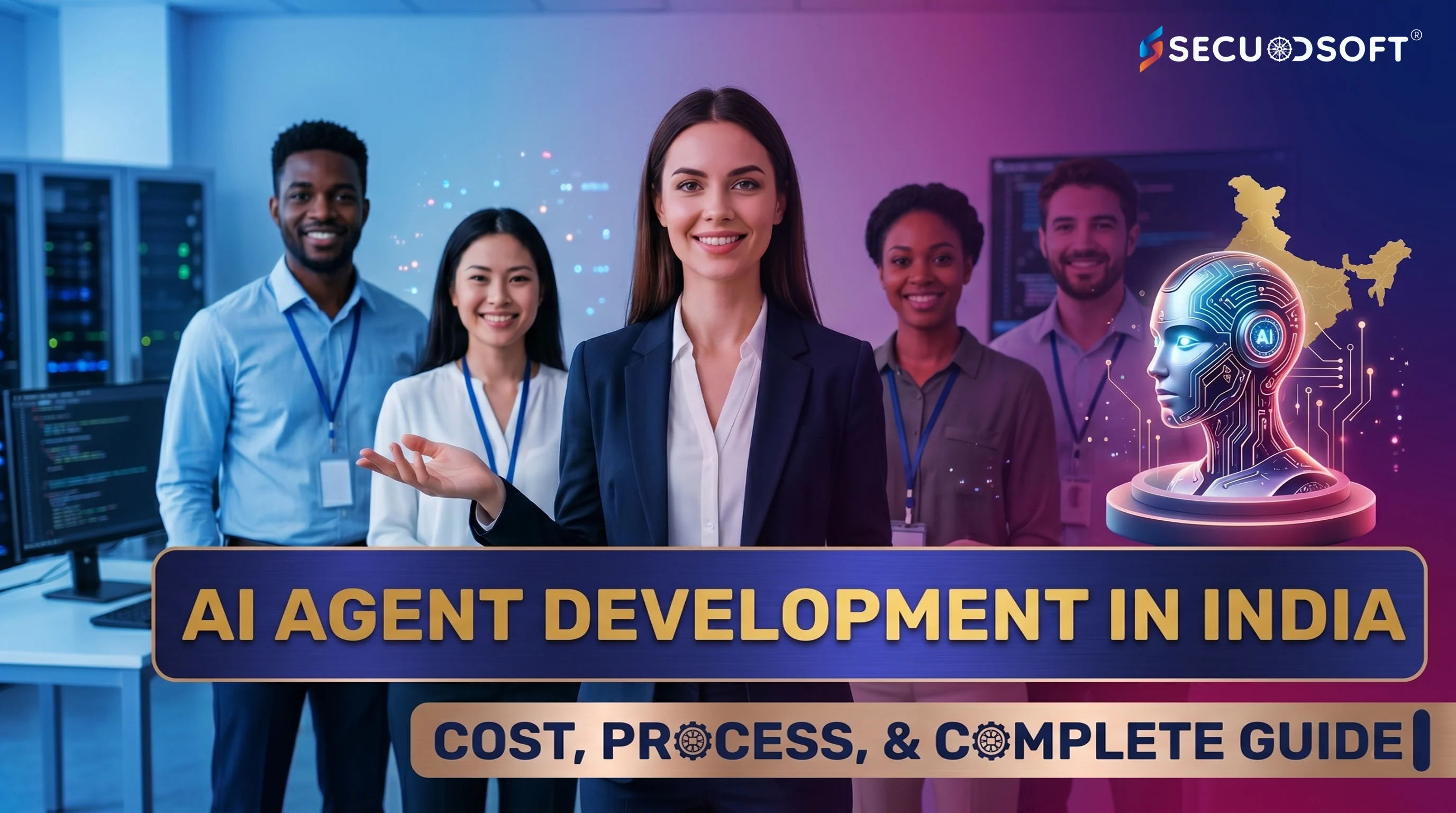
AI Agent Development in India 2026: Cost, Process & Complete Guide

ai-agent-development-in-india
Machine Learning & AI   Editorial Team   29 April 2026

The AI agent revolution is transforming business automation in 2026, with AI agent development enabling companies to deploy autonomous systems handling customer service, sales, operations, and complex decision-making, yet 58% of AI agent projects fail due to poor planning, inadequate training data, or choosing inexperienced developers costing ₹10-40 lakhs in wasted investments. Unlike traditional chatbots that follow scripted responses, modern AI agents powered by GPT-4, Claude, and custom LLMs demonstrate reasoning capabilities, take autonomous actions, use tools dynamically, learn from interactions, and handle multi-step workflows without human intervention. While basic chatbots cost ₹2-5 lakhs, sophisticated autonomous AI agents with tool integration, memory systems, and decision-making capabilities range ₹5-50 lakhs depending on complexity, requiring 2-8 months development by experienced AI agent development companies understanding both AI technology and business workflows.

This comprehensive 2026 guide covers everything Indian businesses need about AI agent development, from understanding agent types (reactive, cognitive, autonomous), essential capabilities (reasoning, planning, tool use), realistic cost breakdowns, technology stacks (LangChain, AutoGPT, CrewAI), implementation processes, and proven strategies for deploying AI agents that deliver 40-70% cost savings through intelligent automation while maintaining quality and reliability.

Understanding AI Agents

What is an AI Agent?

AI agents are autonomous software systems that perceive their environment, make decisions, take actions to achieve specific goals, and learn from outcomes without constant human supervision. Unlike traditional automation following rigid rules, AI agents demonstrate reasoning, adaptability, and decision-making capabilities.

Key Characteristics

  • Autonomous decision-making
  • Goal-oriented behavior
  • Learning and adaptation
  • Tool and API usage
  • Reasoning and planning
  • Multi-step task execution

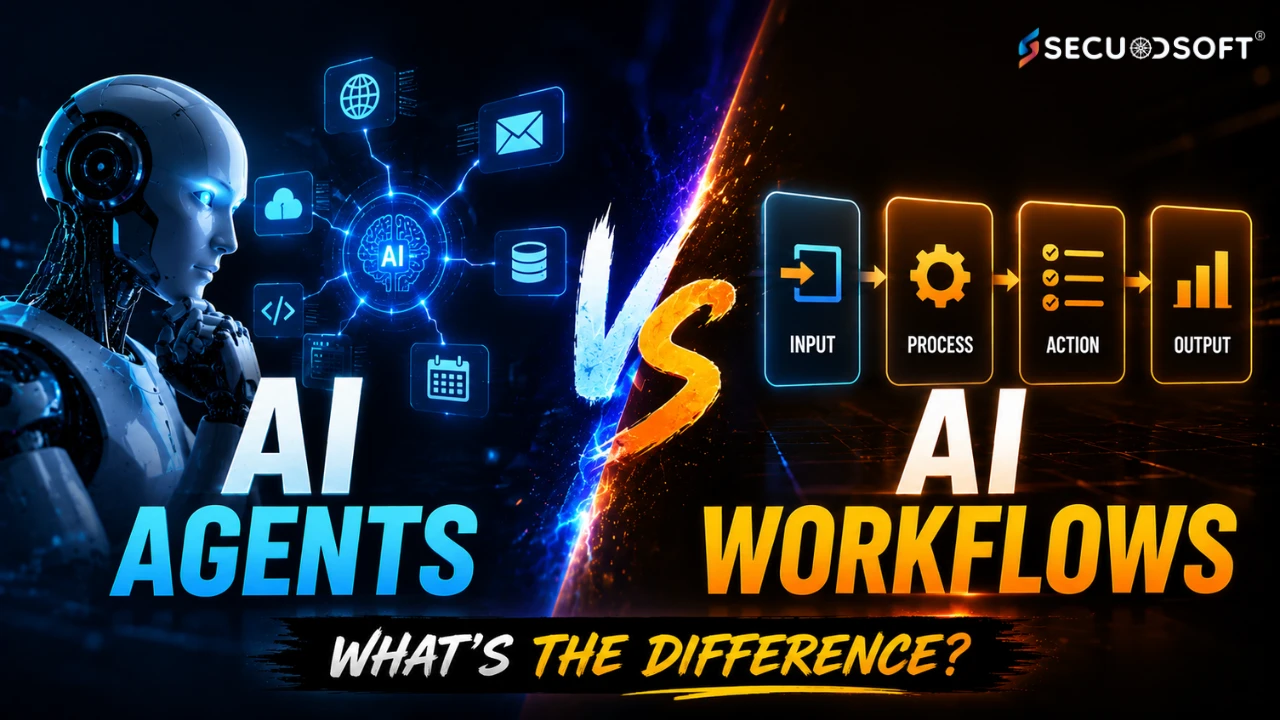
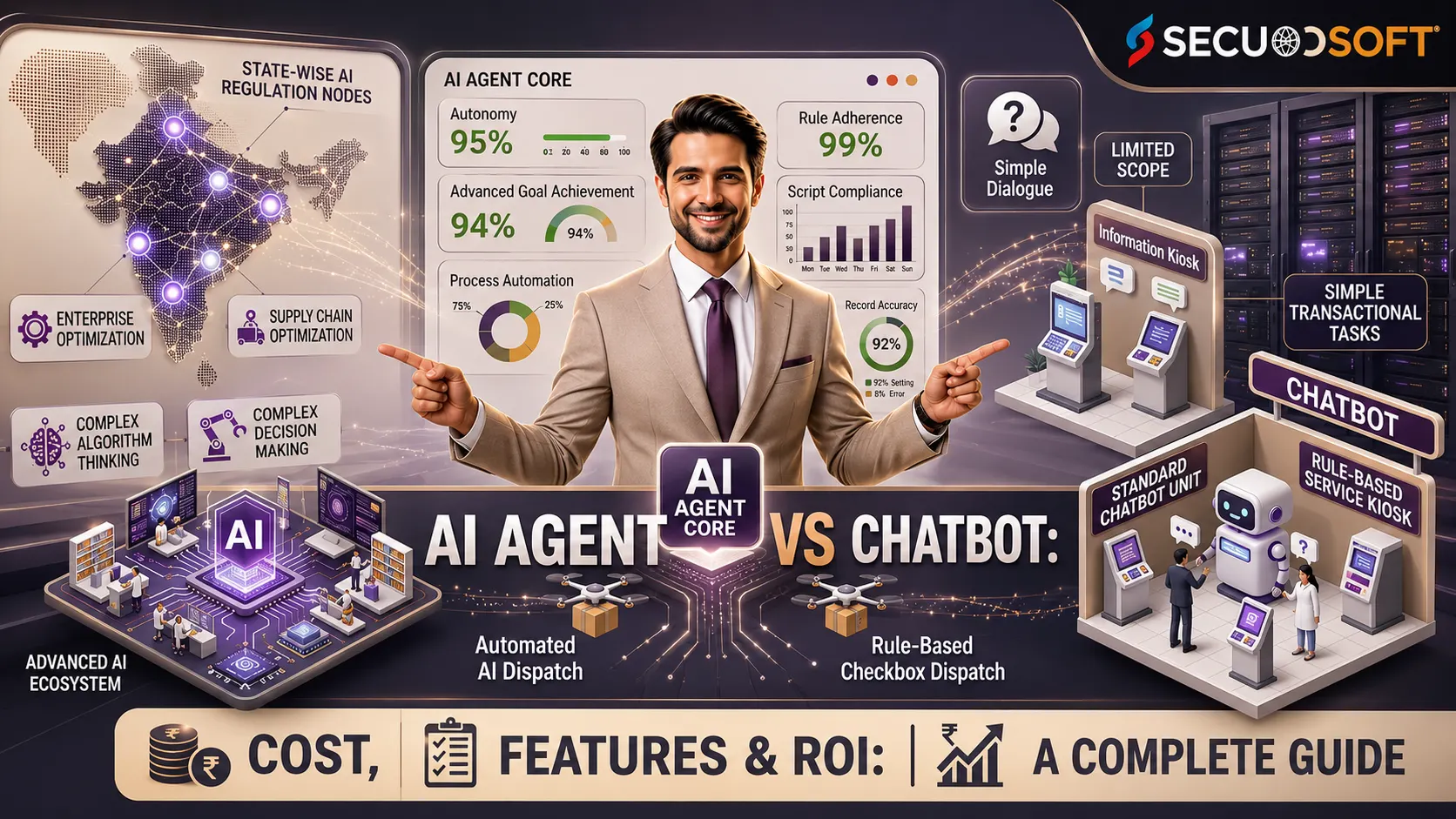
AI Agents vs Traditional Chatbots

Feature Traditional Chatbot AI Agent
Intelligence Rule-based, scripted Reasoning, autonomous
Decision Making Predefined flows Dynamic, context-aware
Tool Usage Limited integrations Uses multiple tools independently
Learning Static knowledge Learns from interactions
Task Complexity Simple Q&A Multi-step complex workflows
Autonomy Human-in-the-loop Autonomous execution
Cost ₹2L - ₹5L ₹5L - ₹50L
Development Time 1-2 months 2-8 months

Types of AI Agents

1. Reactive Agents

Purpose: Respond to specific inputs without memory Use Cases: Simple customer queries, data lookup, form filling Cost: ₹5L - ₹12L Examples: FAQ bots, basic automation

2. Cognitive Agents

Purpose: Understand context, maintain conversation memory Use Cases: Customer service, sales assistance, technical support Cost: ₹10L - ₹25L Examples: Advanced chatbots, virtual assistants

3. Autonomous Agents

Purpose: Self-directed task completion with minimal supervision Use Cases: Lead qualification, data analysis, content generation Cost: ₹15L - ₹40L Examples: Sales agents, research agents, coding agents

4. Multi-Agent Systems

Purpose: Multiple specialized agents collaborating Use Cases: Complex workflows, enterprise automation, decision support Cost: ₹25L - ₹50L+ Examples: Automated workflows, intelligent process automation
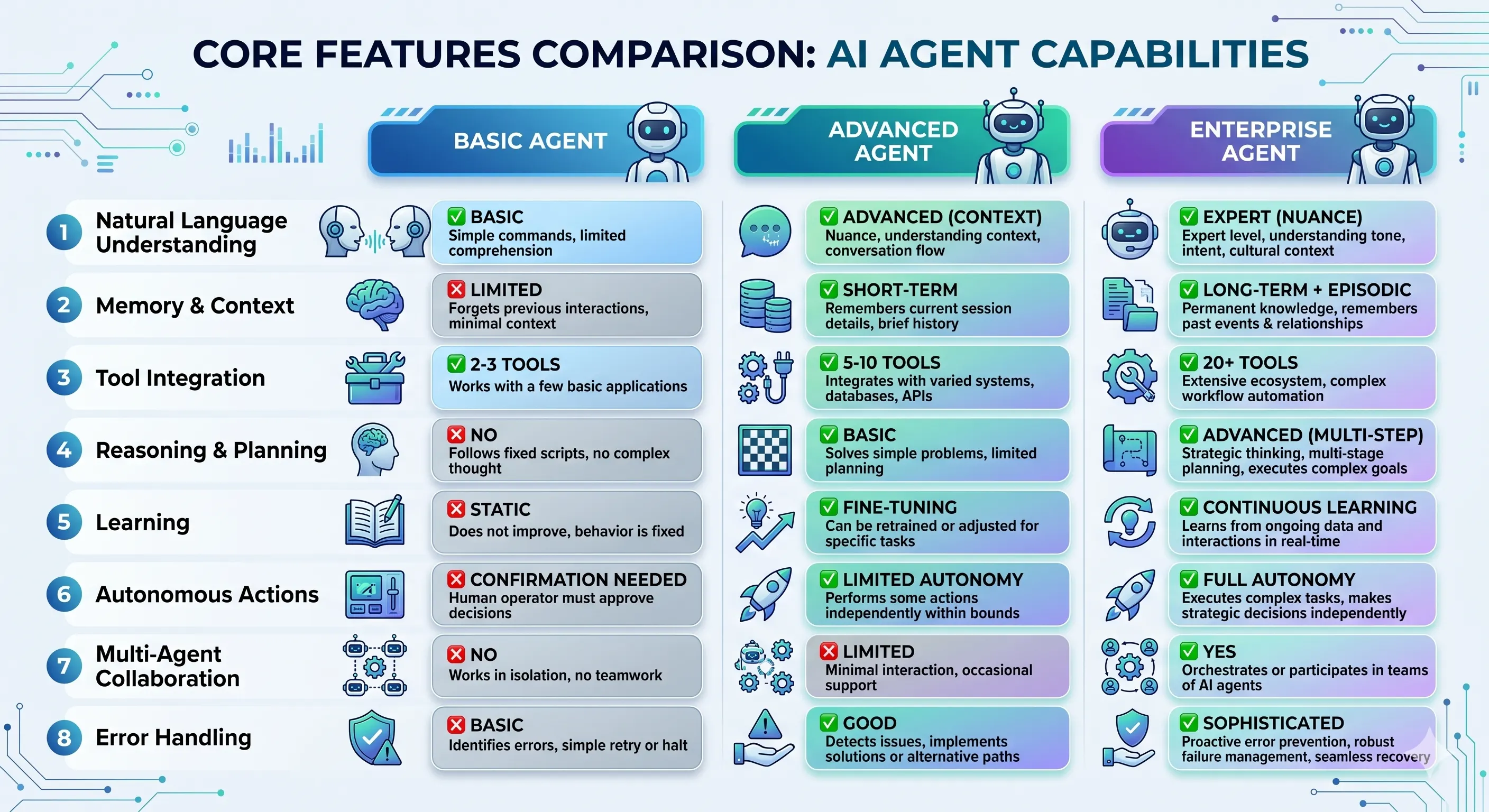
Essential AI Agent Capabilities

AI Agent Capabilities

Core Features Comparison

Capability Basic Agent Advanced Agent Enterprise Agent
Natural Language Understanding ✔️ Basic ✔️ Advanced (context) ✔️ Expert (nuance)
Memory & Context ❌ Limited ✔️ Short-term ✔️ Long-term + episodic
Tool Integration ✔️ 2-3 tools ✔️ 5-10 tools ✔️ 20+ tools
Reasoning & Planning ❌ No ✔️ Basic ✔️ Advanced (multi-step)
Learning ❌ Static ✔️ Fine-tuning ✔️ Continuous learning
Autonomous Actions ❌ Confirmation needed ✔️ Limited autonomy ✔️ Full autonomy
Multi-Agent Collaboration ❌ No ❌ Limited ✔️ Yes
Error Handling ❌ Basic ✔️ Good ✔️ Sophisticated

Must-Have Features

Reasoning Engine

  • Chain-of-thought processing
  • Problem decomposition
  • Multi-step planning
  • Decision-making logic
  • Self-correction capabilities

Memory Systems

  • Short-term (conversation context)
  • Long-term (user preferences, history)
  • Episodic memory (past interactions)
  • Working memory (current task state)

Tool Integration

  • API calling capabilities
  • Database queries
  • File operations
  • Web browsing
  • Code execution
  • Email/messaging
  • Calendar management
  • Payment processing

Goal Management

  • Task decomposition
  • Priority handling
  • Progress tracking
  • Goal completion verification

Safety & Control

  • Action confirmation (critical tasks)
  • Budget/rate limits
  • Audit trails
  • Rollback capabilities
  • Human oversight options

AI Agent Development Cost Breakdown

Cost by Agent Complexity

Agent Type Features Timeline Cost Range
Basic Reactive Simple Q&A, API lookup 1-2 months ₹5L - ₹12L
Cognitive Assistant Context awareness, memory, 5-10 tools 2-4 months ₹10L - ₹25L
Autonomous Agent Self-directed, reasoning, 15+ tools 4-6 months ₹15L - ₹40L
Multi-Agent System Specialized agents, collaboration 6-10 months ₹25L - ₹50L+

Detailed Cost Components

1. Planning & Design (15-20%)
Cost: ₹1L - ₹8L

Includes:

  • Use case definition
  • Agent capability design
  • Workflow mapping
  • Tool integration planning
  • Safety protocols design
  • Success metrics definition

2. AI Model Selection/Development (25-35%)

Approach Description Cost
Pre-trained LLM APIs GPT-4, Claude, Gemini ₹2L - ₹8L
Fine-tuned Models Custom training on domain data ₹5L - ₹15L
Custom Models Built from scratch ₹15L - ₹30L+

3. Agent Framework Development (30-40%)

Cost: ₹3L - ₹20L

Components:

  • Core agent architecture
  • Memory system implementation
  • Reasoning engine development
  • Tool integration framework
  • Action execution system
  • Error handling
  • Monitoring systems

4. Tool & API Integration (15-20%)

Cost per Integration:

Integration Type Cost Range
Standard APIs (REST) ₹30K - ₹1L
Database connections ₹50K - ₹1.5L
CRM/ERP systems ₹1L - ₹4L
Custom tools ₹75K - ₹3L
Payment gateways ₹50K - ₹2L
Communication tools ₹40K - ₹1.5L

5. Testing & Optimization (10-15%)

Cost: ₹75K - ₹6L

Testing Types:

  • Functional testing
  • Reasoning accuracy testing
  • Tool integration testing
  • Safety/security testing
  • Performance testing
  • Edge case handling

6. Deployment & Training (5-10%)

Cost: ₹50K - ₹4L

Services:

  • Production deployment
  • Monitoring setup
  • User training
  • Documentation
  • Knowledge base creation

7. Ongoing Costs (Annual)

Maintenance: ₹1L - ₹8L/year (15-20% of development) LLM API Costs: ₹50K - ₹10L/year (usage-based) Infrastructure: ₹1L - ₹5L/year Monitoring & Updates: ₹75K - ₹4L/year

Sample Project Cost Example

Customer Service AI Agent (Medium Complexity)

Component Cost Duration
Planning & Design ₹2L 2 weeks
Model Fine-tuning ₹6L 4 weeks
Agent Framework ₹8L 8 weeks
Tool Integrations (5) ₹3L 4 weeks
Memory System ₹2L 2 weeks
Testing & QA ₹2L 3 weeks
Deployment ₹1L 1 week
Total ₹24L 5-6 months
Annual Maintenance ₹4L Ongoing

AI Agent Development Process

Phase 1: Discovery & Planning (2-3 weeks)

Step 1: Define Agent Purpose

  • Identify specific tasks and goals
  • Determine success metrics
  • Map current workflows
  • Identify automation opportunities

Step 2: Capability Requirements

Requirement Category Questions to Answer
Intelligence Level Simple Q&A or complex reasoning?
Autonomy Full automation or human-in-loop?
Tools Needed What systems must agent access?
Memory Context from past interactions needed?
Learning Static or continuous learning?
Safety What guardrails required?

Step 3: Technology Selection

  • Choose base LLM (GPT-4, Claude, custom)
  • Select agent framework (LangChain, AutoGPT, CrewAI)
  • Determine infrastructure (cloud provider)
  • Plan tool integrations

Phase 2: Architecture Design (2-4 weeks)

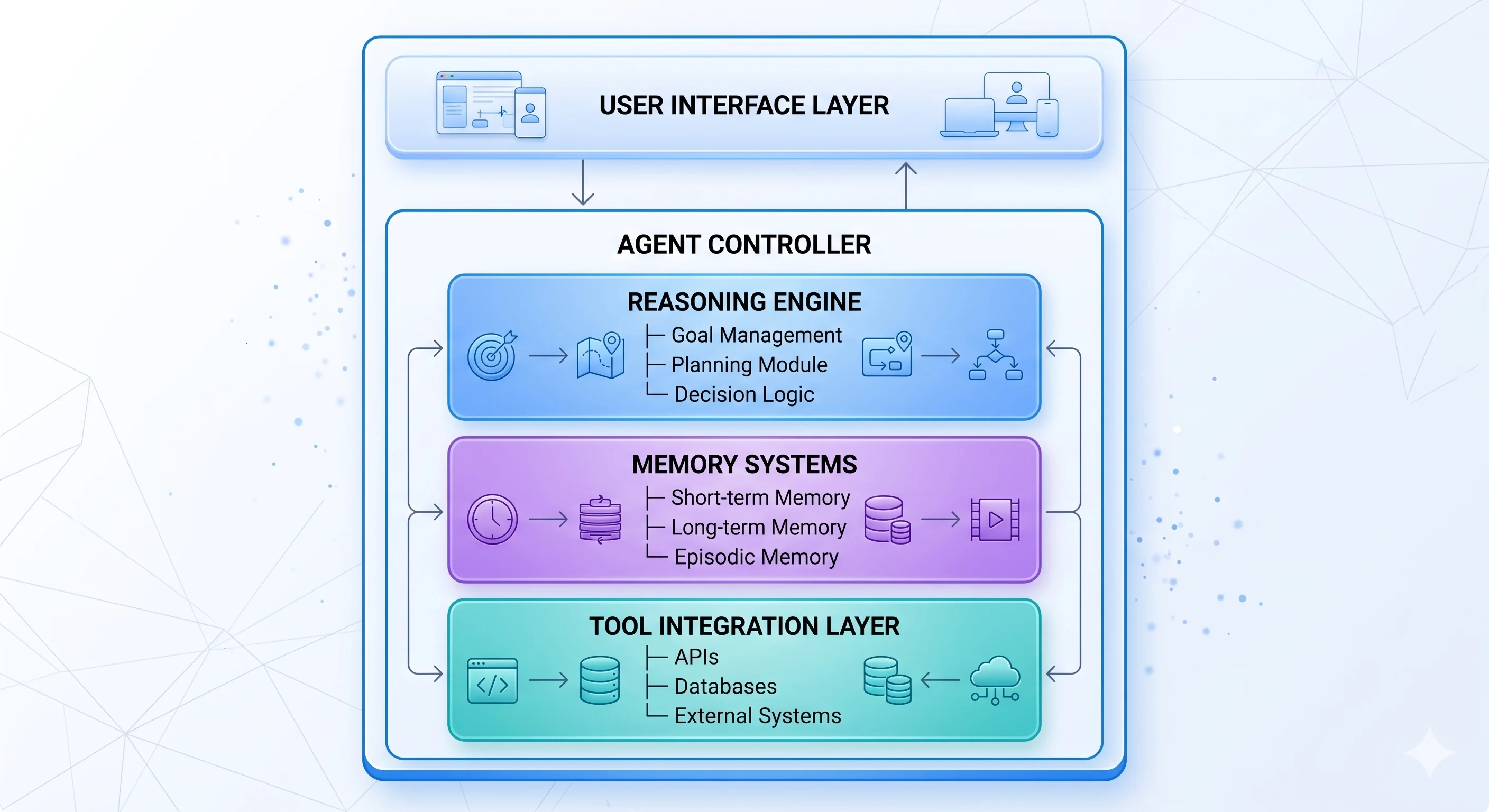
Agent Architecture Components:

Best AI App Development Company Key Services & Solutions

Design Decisions:

  • Agent interaction patterns
  • Memory structure and storage
  • Tool selection and configuration
  • Safety and monitoring mechanisms
  • Fallback strategies

Phase 3: Development (8-20 weeks)

Week 1-4: Core Agent Development

  • Implement base agent logic
  • Set up LLM integration
  • Build reasoning engine
  • Create basic tool framework

Week 5-8: Memory & Context

  • Implement conversation memory
  • Build user preference storage
  • Create context management
  • Develop retrieval systems

Week 9-12: Tool Integration

  • Connect APIs and databases
  • Implement action execution
  • Build error handling
  • Create confirmation workflows

Week 13-16: Reasoning & Planning

  • Develop multi-step planning
  • Implement goal decomposition
  • Build decision trees
  • Create self-correction logic

Week 17-20: Advanced Features

  • Multi-agent coordination (if needed)
  • Learning mechanisms
  • Advanced safety features
  • Performance optimization

Phase 4: Training & Fine-tuning (3-6 weeks)

Data Preparation

  • Collect domain-specific data
  • Create example interactions
  • Build tool usage examples
  • Prepare edge cases

Model Training

  • Fine-tune base model
  • Train reasoning patterns
  • Optimize tool selection
  • Improve response quality

Testing Scenarios

Test Type Focus Pass Criteria
Functional Core capabilities work 95%+ success rate
Reasoning Logical decision-making 90%+ correct logic
Tool Usage Correct tool selection 95%+ accuracy
Safety Harmful action prevention 100% blocked
Edge Cases Unusual scenarios 85%+ handled well

Phase 5: Deployment (2-3 weeks)

Deployment Strategy

Option 1: Gradual Rollout

  • Week 1: Internal team (10 users)
  • Week 2: Beta group (50 users)
  • Week 3: Phased expansion

Option 2: Controlled Launch

  • Limited use cases first
  • Monitor closely
  • Expand capabilities gradually

Monitoring Setup

  • Action logs and audit trails
  • Performance metrics
  • Error tracking
  • Cost monitoring
  • User feedback collection

Phase 6: Optimization (Ongoing)

Continuous Improvement

  • Analyze agent performance weekly
  • Fix issues within 24-48 hours
  • Optimize based on usage patterns
  • Expand capabilities based on needs
  • Optimize costs (LLM usage, tools)

Technology Stack for AI Agents

Recommended Technologies

Component Options Best Choice
Base LLM GPT-4, Claude, Gemini, Llama GPT-4 or Claude (reasoning)
Agent Framework LangChain, AutoGPT, CrewAI, Custom LangChain (versatile)
Vector Database Pinecone, Weaviate, Chroma Pinecone (scalable)
Memory Store Redis, PostgreSQL PostgreSQL (reliability)
Backend Python, Node.js Python (AI ecosystem)
Deployment AWS, Azure, GCP AWS (comprehensive)
Monitoring LangSmith, Helicone, Custom LangSmith (agent-specific)

Popular Agent Frameworks

1. LangChain

  • Most popular and mature
  • Extensive tool integrations
  • Active community
  • Good documentation
  • Best for: General-purpose agents

2. AutoGPT

  • High autonomy
  • Goal-oriented
  • Self-directed
  • Needs careful oversight

Best for: Research, content creation

3. CrewAI

  • Multi-agent systems
  • Role-based agents
  • Collaborative workflows

Best for: Complex workflows

4. LlamaIndex

  • Data-focused
  • Excellent for RAG
  • Document querying

Best for: Knowledge bases, Q&A

Use Cases and ROI

Industry-Specific Applications

Banking & Finance

  • Use Case: Loan processing agent
  • Capabilities: Document verification, risk assessment, approval workflows
  • ROI: 60% faster processing, 40% cost reduction
  • Investment: ₹18L - ₹35L

E-commerce

  • Use Case: Sales and support agent
  • Capabilities: Product recommendations, order handling, issue resolution
  • ROI: 50% support cost reduction, 25% sales increase
  • Investment: ₹12L - ₹28L

Healthcare

  • Use Case: Patient engagement agent
  • Capabilities: Appointment scheduling, symptom checking, follow-ups
  • ROI: 70% admin time saved, improved patient satisfaction
  • Investment: ₹15L - ₹32L

Education

  • Use Case: Personalized tutoring agent
  • Capabilities: Adaptive learning, doubt resolution, progress tracking
  • ROI: Scalable education, 10x student reach
  • Investment: ₹10L - ₹25L

Manufacturing

  • Use Case: Predictive maintenance agent
  • Capabilities: Data analysis, anomaly detection, maintenance scheduling
  • ROI: 45% downtime reduction, ₹20L+ annual savings
  • Investment: ₹20L - ₹40L

Expected Returns

Agent Type Implementation Cost Annual Savings ROI Timeline
Customer Service ₹15L - ₹30L ₹40L - ₹80L 6-12 months
Sales Agent ₹12L - ₹25L ₹35L - ₹70L 9-15 months
Operations ₹18L - ₹35L ₹50L - ₹1Cr 12-18 months
Data Analysis ₹10L - ₹22L ₹25L - ₹60L 8-14 months

Why Choose Secuodsoft for AI Agent Development

Secuodsoft, a CMMI Level 3 appraised AI-first company, delivers comprehensive AI agent development services combining advanced technology with proven implementation expertise.

Our AI Agent Expertise

Track Record

  • 25+ AI agent implementations
  • Expertise across LLM platforms
  • Multi-agent system experience
  • 95% client satisfaction
  • Average ROI: 280% within 18 months

Agent Types We Build

Agent Type Capabilities Timeline Cost
Reactive Agents Q&A, lookup, basic tasks 1-2 months ₹5L - ₹12L
Cognitive Agents Context, memory, reasoning 2-4 months ₹10L - ₹25L
Autonomous Agents Self-directed, multi-tool 4-6 months ₹15L - ₹40L
Multi-Agent Systems Collaborative, specialized 6-10 months ₹25L - ₹50L+
Trusted AI Agent Development Partner

Conclusion

AI agent development in 2026 represents transformative opportunities for Indian businesses seeking intelligent automation delivering 40-70% cost savings while improving quality and scalability. Success requires understanding agent types (reactive, cognitive, autonomous), realistic cost planning (₹5-50 lakhs based on complexity), choosing appropriate technology stacks (GPT-4/Claude with LangChain), and partnering with experienced AI agent development companies who balance cutting-edge AI capabilities with practical business implementation. Whether building customer service agents, sales automation, or complex multi-agent systems, focus on clear use cases, proper planning, thorough testing, and continuous optimization. Start with well-defined problems, build MVPs validating value, scale gradually based on results, and maintain human oversight for critical decisions. Partner with proven developers like Secuodsoft who combine technical expertise with business understanding, ensuring your AI agents deliver measurable ROI transforming operations through intelligent automation.

Frequently Asked Questions

AI agent development cost in India ranges from ₹5 lakhs to ₹50 lakhs+ depending on complexity and capabilities. Basic reactive agents handling simple Q&A and API lookups cost ₹5-12 lakhs taking 1-2 months. Cognitive agents with context awareness, memory systems, and 5-10 tool integrations range ₹10-25 lakhs over 2-4 months. Autonomous agents demonstrating reasoning, multi-step planning, and 15+ tool integrations cost ₹15-40 lakhs requiring 4-6 months. Multi-agent systems with specialized collaborative agents exceed ₹25 lakhs taking 6-10 months. Cost components include planning (15-20%), AI model selection/fine-tuning (25-35%), agent framework development (30-40%), tool integrations (15-20%), testing (10-15%), and deployment (5-10%). Ongoing costs include annual maintenance (₹1-8 lakhs), LLM API usage (₹50K-₹10 lakhs based on volume), and infrastructure (₹1-5 lakhs). Pre-trained LLM APIs (GPT-4, Claude) cost less (₹2-8 lakhs) than custom model development (₹15-30 lakhs). Choose developers providing transparent breakdowns, realistic timelines, and proven agent implementations rather than selecting based solely on lowest cost.

AI agent development timeline ranges from 1-10 months depending on complexity. Basic reactive agents take 1-2 months including planning (2 weeks), development (4-6 weeks), testing (2 weeks), and deployment (1 week). Cognitive agents with memory and reasoning require 2-4 months covering detailed planning (3 weeks), architecture design (2 weeks), development (8-12 weeks), testing (3-4 weeks), and deployment (2 weeks). Autonomous agents with advanced capabilities need 4-6 months through comprehensive planning (4 weeks), complex development (12-16 weeks), extensive testing (4-6 weeks), and careful deployment (3-4 weeks). Multi-agent systems require 6-10 months with extensive design, parallel agent development, integration testing, and phased rollout. Timeline factors include agent autonomy level (more autonomy requires more testing), number of tool integrations (each adds 1-3 weeks), custom model training vs API usage (training adds 4-8 weeks), team size and experience, and domain complexity. Rushed timelines compromise safety and quality, proper planning, development, testing, and monitoring ensure reliable agents delivering promised value.

AI agents and chatbots differ fundamentally in intelligence, autonomy, and capabilities. Traditional chatbots follow rule-based scripted flows, provide predefined responses, require explicit programming for each scenario, lack reasoning ability, need human-in-loop for complex queries, handle only simple Q&A, and cost ₹2-5 lakhs for development. Modern AI agents demonstrate autonomous decision-making, use reasoning and planning for multi-step tasks, dynamically select and use multiple tools/APIs, learn from interactions and feedback, handle complex workflows independently, adapt to new situations, and cost ₹5-50 lakhs based on sophistication. Example comparison: chatbot handles "What's my order status?" by looking up order ID and displaying predefined response; AI agent handles "I need to return defective item, get refund, and reorder replacement" by reasoning through steps, checking return policy, initiating return process, processing refund, recommending alternatives, and completing reorder, all autonomously. AI agents leverage large language models (GPT-4, Claude) for understanding and reasoning, maintain conversational memory and user context, integrate with 10+ tools/systems, execute actions based on goals, and provide sophisticated problem-solving. Choose chatbots for simple FAQ handling and basic automation (₹2-5 lakhs); choose AI agents for complex automation, multi-step workflows, and intelligent decision-making (₹5-50 lakhs).

Multiple industries achieve significant ROI from AI agent implementation. Banking and finance benefits through loan processing agents (60% faster approvals), fraud detection agents (85% accuracy improvement), customer service agents (50% cost reduction), and compliance monitoring agents, investment ₹15-40 lakhs, ROI 12-18 months. E-commerce gains from sales agents (25% conversion increase), customer service agents (70% ticket automation), inventory management agents, and personalized recommendation agents, investment ₹10-30 lakhs, ROI 6-12 months. Healthcare improves with patient engagement agents (scheduling, reminders), diagnostic assistance agents (preliminary assessments), medical record management agents, and insurance processing agents, investment ₹15-35 lakhs, ROI 12-18 months. Real estate benefits from lead qualification agents (40% time savings), property recommendation agents, document processing agents, and client communication agents, investment ₹12-28 lakhs, ROI 9-15 months. Manufacturing gains from predictive maintenance agents (45% downtime reduction), supply chain optimization agents, quality control agents, and inventory management agents, investment ₹18-40 lakhs, ROI 12-18 months. Customer service across industries achieves 50-70% cost reduction, 24/7 availability, consistent quality, and improved satisfaction through AI agents handling tier-1 queries, escalating complex issues, and learning from interactions. Industries with high-volume repetitive tasks, complex decision-making needs, or 24/7 operation requirements achieve fastest ROI.

AI agent safety and reliability require multiple layers of controls, testing, and monitoring. Development phase safety includes comprehensive capability boundaries (defining what agent can/cannot do), explicit tool access controls (permission-based API usage), budget and rate limits (preventing runaway actions), confirmation requirements for critical operations (financial transactions, data deletion, customer communications), comprehensive testing across normal scenarios and edge cases, adversarial testing (attempting to trick agent), and safety protocol validation ensuring harmful actions blocked 100%. Deployment safety mechanisms include human-in-the-loop for high-stakes decisions, action rollback capabilities (undo mechanisms), audit trails logging all agent actions with timestamps and reasoning, graduated autonomy (starting restrictive, gradually expanding), real-time monitoring dashboards tracking agent behavior, automatic circuit breakers triggering on anomalies, and fallback to human agents when confidence low. Ongoing reliability through daily performance monitoring (success rates, errors, timeouts), weekly analysis of agent decisions and outcomes, user feedback integration, regular retraining on new data, A/B testing changes before full deployment, incident response protocols, and continuous optimization based on production data. Best practices include starting with limited scope and expanding gradually, maintaining human oversight initially, establishing clear escalation paths, implementing comprehensive logging, testing thoroughly before production, monitoring closely post-deployment, and iterating based on real-world performance. Partner with experienced AI agent development companies like Secuodsoft who implement proven safety frameworks ensuring reliable, trustworthy agents.