The debate between AI Agent vs Agentic AI has become crucial for Indian businesses navigating the artificial intelligence landscape in 2026, as organizations struggle to understand which approach delivers better ROI, scalability, and competitive advantage. As India's AI market projected to reach $17 billion by 2027, with 80% of enterprises planning AI adoption, understanding the distinction between AI agents and agentic AI systems isn't just academic, it's essential for making informed technology investments that transform operations, enhance customer experiences, and drive growth. The confusion around these terms stems from overlapping capabilities, marketing hype, and rapid technological evolution, leaving Indian CTOs, business owners, and technology leaders uncertain about which path aligns with their digital transformation goals. Whether you're a Mumbai-based fintech startup seeking intelligent automation, a Bangalore enterprise implementing customer service solutions, or a Delhi manufacturer optimizing operations, understanding AI agent vs agentic AI differences determines whether your AI initiatives deliver breakthrough results or become expensive experiments with limited business impact.
TThe artificial intelligence landscape has evolved dramatically from simple rule-based systems to sophisticated autonomous AI agents capable of independent decision-making, learning from experiences, and executing complex tasks with minimal human supervision. However, terminology confusion persists, with vendors and consultants using AI agent and agentic AI interchangeably despite representing fundamentally different approaches to artificial intelligence implementation. This comprehensive guide cuts through marketing noise, providing clear definitions, practical comparisons, real-world applications, and strategic recommendations helping Indian businesses choose the optimal AI approach for their specific requirements, industry context, and organizational maturity in 2026.
An AI agent is a software program or system that perceives its environment through sensors or data inputs, processes information using artificial intelligence algorithms, makes autonomous decisions based on programmed goals, and takes actions to achieve specific objectives. Unlike traditional software following rigid, predetermined instructions, AI agents exhibit intelligent behavior adapting to changing conditions, learning from interactions, and making decisions without constant human intervention.
The concept of AI agents originates from classical AI research defining agents as entities with four key characteristics: autonomy (operating without direct human control), reactivity (responding to environmental changes), proactivity (taking initiative toward goals), and social ability (interacting with other agents or humans). Modern AI agents leverage machine learning, natural language processing, computer vision, and reinforcement learning technologies enabling sophisticated perception, reasoning, and action capabilities.
AI agent applications span diverse domains including conversational AI agents (chatbots, virtual assistants), recommendation agents (personalized content and product suggestions), monitoring agents (fraud detection, predictive maintenance), trading agents (algorithmic trading systems), personal assistant agents (scheduling, email management), and robotic agents (autonomous vehicles, manufacturing robots). Each implementation shares core characteristics of perceiving environments, processing information intelligently, and taking autonomous actions.
Simple Reflex Agents maintain internal models tracking unobservable aspects of environments, enabling more sophisticated decision-making. These agents consider current percepts plus internal state representations built from past experiences. Example: autonomous vehicle tracking other cars' positions and velocities predicting future positions.
Goal-Based Agentsmake decisions evaluating which actions achieve desired goals, considering future consequences of actions. These agents use search and planning algorithms finding action sequences reaching goals. Example: navigation system planning routes to destinations.
Utility-Based Agents extend goal-based agents by considering multiple goals and preferences, using utility functions measuring desirability of states. These agents optimize for best outcomes when multiple goals conflict or involve tradeoffs. Example: investment portfolio management balancing risk and return.
Learning Agents improve performance over time through experience, adapting behaviors based on feedback. These agents incorporate machine learning enabling continuous improvement without explicit reprogramming. Example: recommendation systems improving suggestions based on user interactions.
Agentic AI represents an advanced paradigm where artificial intelligence systems exhibit high degrees of autonomy, initiative, and goal-directed behavior going beyond reactive responses to proactively pursue objectives, make independent decisions, and take consequential actions with minimal human oversight. While all agentic AI systems are agents, not all agents qualify as agentic, the distinction lies in sophistication, autonomy level, and capacity for complex, multi-step reasoning and planning.
The term agentic emphasizes agency, the capacity for intentional action, independent decision-making, and proactive goal pursuit. Agentic AI systems don't merely respond to instructions or current conditions; they formulate plans, anticipate future states, make strategic decisions, learn from outcomes, and adapt strategies toward achieving high-level objectives. This proactive, goal-directed nature distinguishes agentic AI from simpler reactive systems.
Agentic AI emerged as AI capabilities advanced enabling more sophisticated autonomous behavior. Early AI agents operated within narrow domains following explicit rules. Modern agentic AI leverages advances in deep learning, reinforcement learning, large language models, and multi-agent systems creating systems exhibiting human-like strategic thinking, contextual understanding, and adaptive problem-solving across complex, dynamic environments.
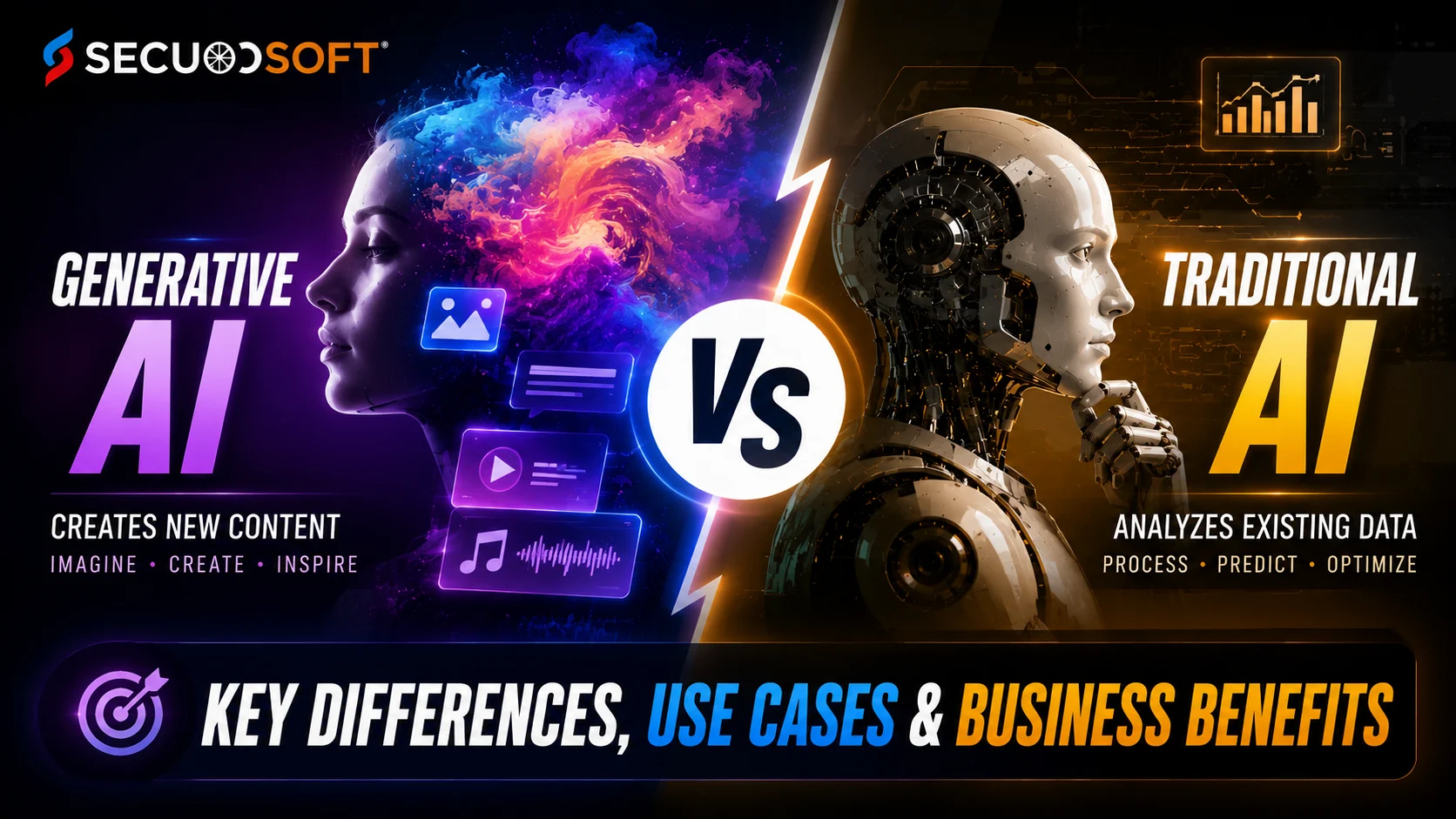
Traditional AI typically operates reactively, responding to specific inputs with predetermined outputs based on trained models or programmed rules. Users provide queries, systems process them, and return results. Agentic AI operates proactively, taking initiative, pursuing goals, and making sequential decisions without constant human direction.
Traditional AI excels at specific tasks, classifying images, translating text, generating content, within narrow domains. Agentic AI handles complex workflows requiring multiple steps, decisions, and adaptations across extended timeframes. This difference resembles contrasting a specialized tool with an autonomous worker capable of managing entire projects.
Traditional AI requires humans defining tasks, providing inputs, and interpreting outputs. Agentic AI reduces human involvement by understanding objectives, determining necessary actions, executing tasks, and delivering results with minimal intervention. This autonomy enables scaling AI impact beyond human bottlenecks.
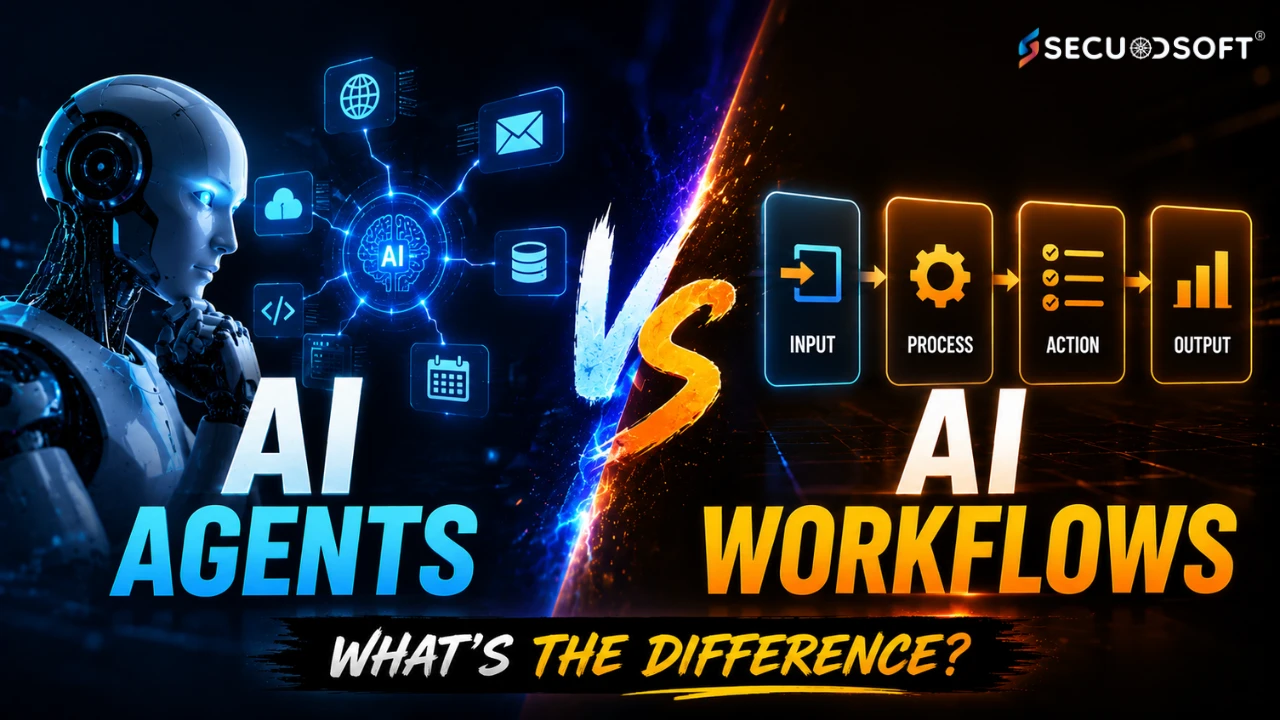
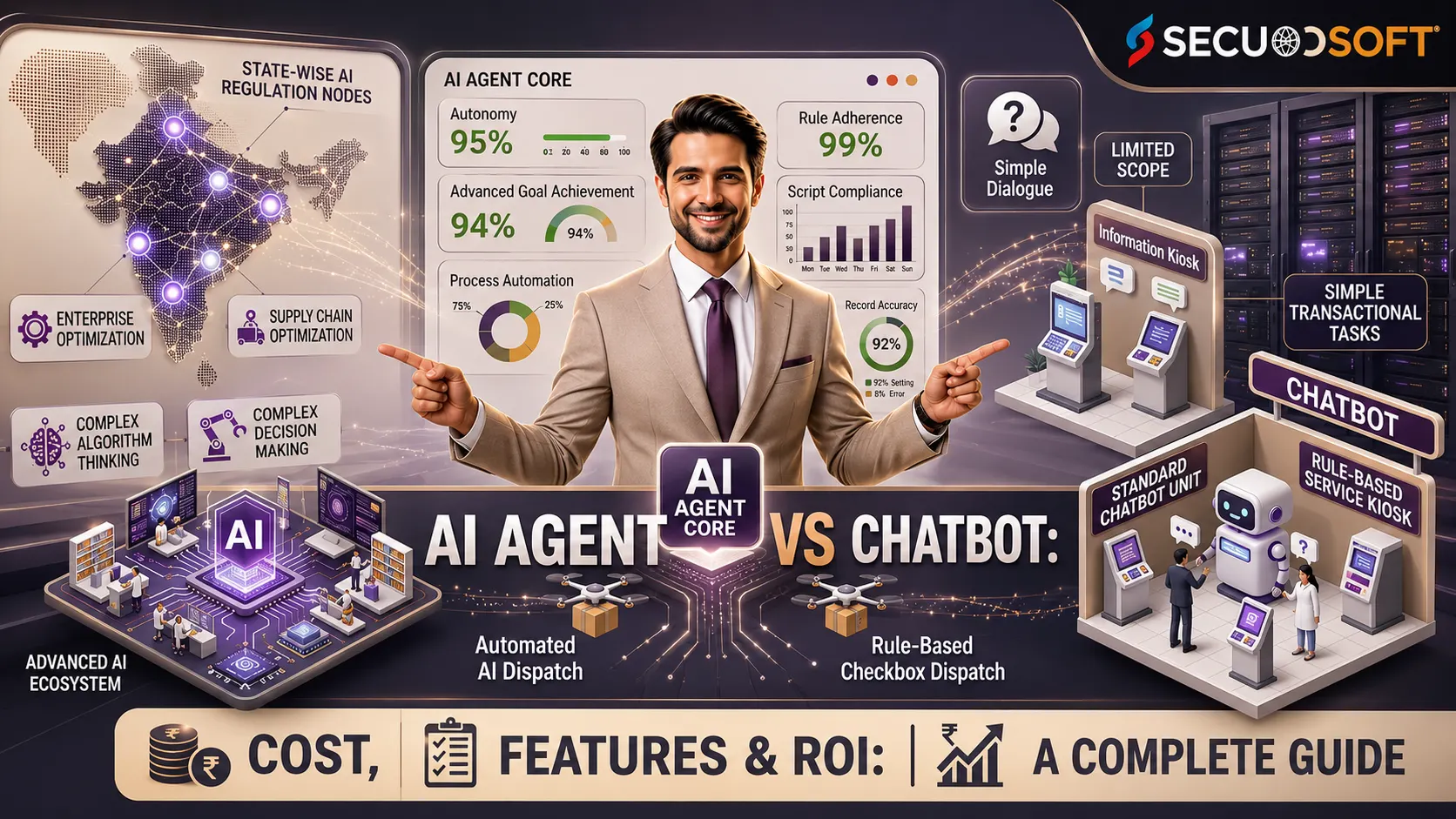
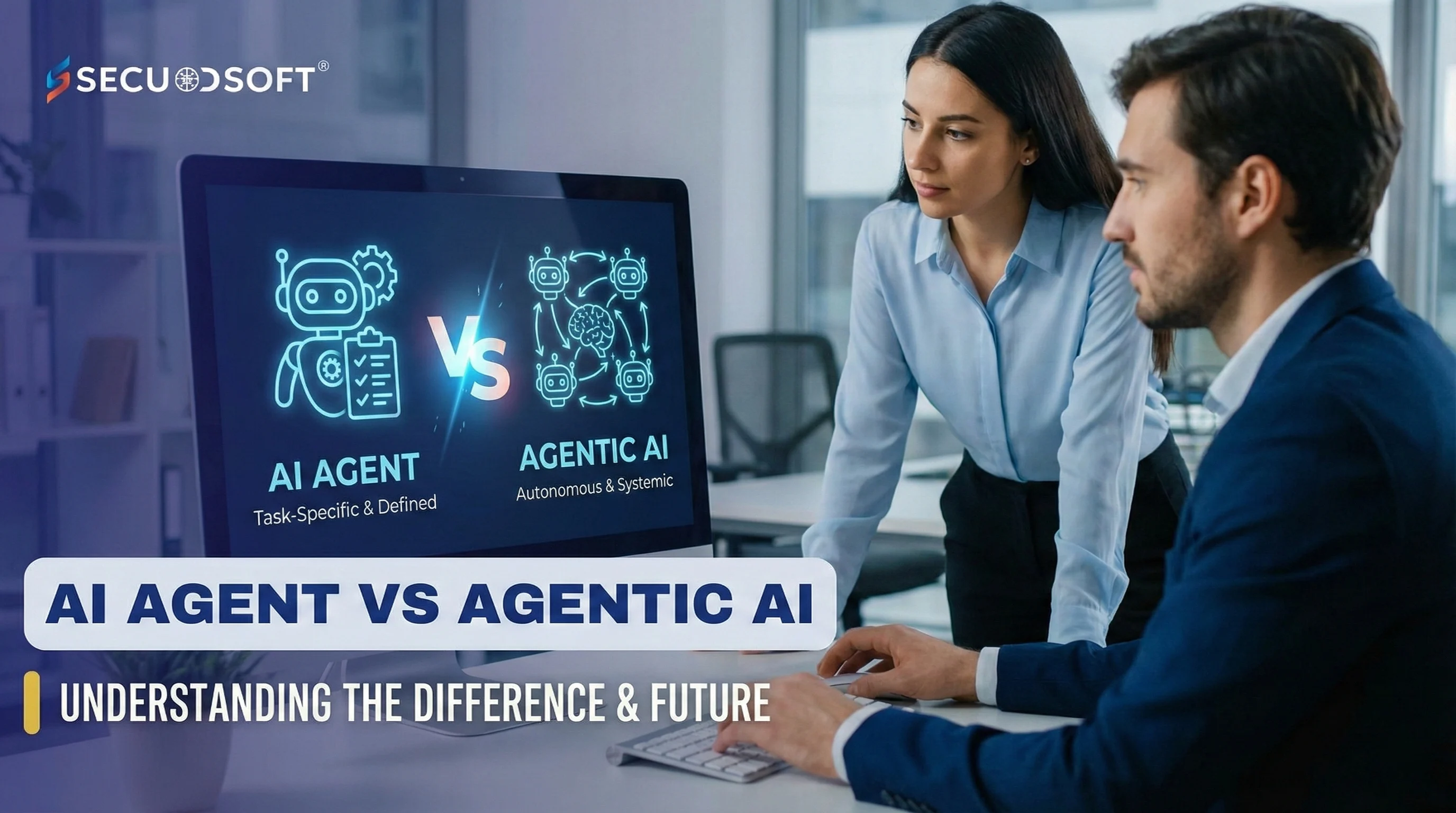
The core AI agent vs agentic AI differences lie in autonomy, complexity, and application. AI agents are task-specific doers, agentic AI are strategic thinkers. Here's a detailed table for 2026 clarity:
| Aspect | AI Agent | Agentic AI |
|---|---|---|
| Autonomy Level | Limited: Follows rules/scripts | High: Plans, adapts, self-corrects |
| Learning | Basic ML/reinforcement | Advanced LLMs/multi-agent collaboration |
| Use Cases | Chat support, scheduling | Supply chain optimization, predictive maintenance |
| Cost (India Avg.) | ₹5-20L (development) | ₹30-80L (complex integrations) |
| Pros | Quick setup, low resource | Innovative, scalable decisions |
| Cons | Rigid in unknowns | Higher compute, ethical risks |
| 2026 Trend | Widespread in customer service | Rising in enterprise AI orchestration |
Indian businesses widely deploy conversational AI agents handling customer inquiries, providing product information, troubleshooting issues, and escalating complex cases to humans. Banking chatbots answer account queries and facilitate transactions. E-commerce assistants help customers find products and track orders. Telecom support bots address service issues and billing questions.
Benefits include 24/7 availability, instant responses, consistent service quality, handling thousands of concurrent conversations, and reducing support costs 40-60%. Limitations include struggles with complex queries, inability to handle exceptions, and frustration when unable to resolve issues.
Recommendation agents power personalized experiences across Indian digital platforms. E-commerce platforms suggest products based on browsing and purchase history. Streaming services recommend content matching user preferences. News aggregators personalize content feeds. Job portals match candidates with relevant opportunities.
These agents analyze user behavior, identify patterns and preferences, predict interests and needs, and generate personalized recommendations. Effective recommendation agents increase engagement, conversions, and customer satisfaction while enabling platforms serving diverse users with relevant experiences.
Financial institutions employ AI agents monitoring transactions for fraudulent activities. These agents analyze transaction patterns, detect anomalies indicating fraud, calculate risk scores, and trigger alerts or blocks for suspicious activities. Banking fraud agents protect customers and institutions from unauthorized transactions. Insurance claim agents identify potentially fraudulent claims for investigation.
Monitoring agents operate continuously, processing millions of transactions in real-time, adapting to evolving fraud tactics, and significantly reducing fraud losses while minimizing false positives disrupting legitimate transactions.
Businesses deploy AI agents automating repetitive tasks across operations. RPA agents combined with AI capabilities handle data entry, invoice processing, report generation, and workflow management. HR agents screen resumes, schedule interviews, and answer employee questions. Finance agents reconcile accounts, generate reports, and process expenses.
Automation agents improve efficiency, reduce errors, ensure consistency, enable employees focusing on high-value work, and scale operations without proportional headcount increases.
Agentic AI managing supply chains autonomously optimizes inventory levels, predicts demand fluctuations, coordinates with suppliers, adjusts production schedules, and manages logistics. Unlike reactive systems responding to stockouts, agentic supply chain AI proactively prevents shortages, identifies cost reduction opportunities, adapts to market changes, and coordinates complex operations.
Indian manufacturers implementing agentic supply chain systems report 20-30% inventory reductions, 15-25% logistics cost savings, and significantly improved service levels through proactive optimization impossible with human management of complex, dynamic supply networks.
Agentic marketing AI manages entire campaigns from strategy through execution. These systems analyze market conditions and customer data, develop campaign strategies, create and deploy content, optimize channels and budgets, and measure and adapt based on performance. Agentic sales AI identifies prospects, personalizes outreach, nurtures leads, and recommends actions to sales teams.
Rather than providing recommendations humans execute, agentic marketing systems operate campaigns independently within defined parameters, continuously optimizing for business objectives. Indian D2C brands leverage agentic marketing achieving customer acquisition costs 30-40% below industry averages through continuous optimization at scale.
Agentic AI orchestrates complex business processes spanning multiple systems, departments, and decision points. For example, agentic loan processing systems gather applicant information, verify credentials, assess risk, determine appropriate terms, generate documentation, and facilitate approvals, managing entire workflows with human involvement only for exceptions.
Unlike traditional workflow automation executing predefined sequences, agentic orchestration adapts to circumstances, handles exceptions intelligently, optimizes for outcomes, and continuously improves processes. Indian NBFCs implementing agentic loan processing reduce approval times from days to hours while improving risk assessment accuracy.
Agentic AI manages complete customer journeys from acquisition through retention and expansion. These systems identify high-value prospects, personalize acquisition campaigns, optimize onboarding experiences, monitor satisfaction and engagement, proactively address churn risks, and identify expansion opportunities.
Rather than separate point solutions for acquisition, onboarding, support, and retention, agentic lifecycle systems coordinate across touchpoints pursuing overarching goal of maximizing customer lifetime value. Indian SaaS companies using agentic lifecycle management report 25-35% improvements in customer retention and 40-50% increases in expansion revenue.
AI agents deliver significant cost savings through handling routine tasks without human labor, operating 24/7 without overtime or benefits, scaling without proportional cost increases, and reducing errors requiring expensive corrections. Indian businesses implementing AI agents report operational cost reductions of 30-50% in automated functions while maintaining or improving service quality.
AI-powered agents enhance customer experiences through instant responses eliminating wait times, 24/7 availability accommodating all schedules, consistent service quality, personalized interactions, and multilingual support serving India's linguistic diversity. Customer satisfaction scores typically improve 20-30% with well-implemented AI agent deployments.
AI agents enable businesses scaling operations without proportional resource increases. Agents handle volume spikes during festivals or promotions, support geographic expansion without local hiring, and enable serving more customers with existing resources. This scalability particularly benefits Indian startups and SMEs growing rapidly without capital for proportional team expansion.
AI agents generate valuable data about customer behaviors, common issues, process bottlenecks, and optimization opportunities. Analyzing agent interactions reveals insights informing product development, service improvements, marketing strategies, and business decisions. This data becomes strategic asset guiding continuous improvement.
Agentic AI makes strategic decisions autonomously, enabling businesses operating at AI speed rather than human speed, making data-driven decisions without bias or fatigue, optimizing for outcomes rather than following rules, and adapting strategies as conditions change. This strategic capability transforms competitive positioning for businesses implementing agentic AI effectively.
Agentic systems manage complete workflows rather than individual tasks, coordinating across systems and functions, handling exceptions and edge cases intelligently, optimizing entire processes rather than local functions, and continuously improving performance. This holistic management delivers outcomes impossible with task-specific automation.
Agentic AI's proactive nature identifies opportunities humans miss, prevents problems before occurrence, continuously optimizes processes, and generates insights driving innovation. This proactive value creation distinguishes agentic AI from reactive systems only responding to situations.
Early agentic AI adoption creates sustainable competitive advantages through superior operational efficiency, enhanced customer experiences, faster time-to-market, and data-driven innovation. As agentic AI becomes more accessible, early adopters establish leads difficult for competitors to overcome.
Both AI agents and agentic AI require significant investments in technology infrastructure, data preparation and quality, skilled talent and expertise, integration with existing systems, and change management. Indian businesses must realistically assess implementation costs, timelines, and organizational readiness before committing to AI initiatives.
AI systems processing customer data raise privacy and security concerns requiring compliance with regulations, secure data handling, transparent data usage, and protection against breaches. Indian businesses must ensure AI implementations comply with data protection laws while maintaining customer trust.
Successfully implementing and managing AI requires specialized skills often scarce in Indian market. Businesses face challenges hiring qualified AI talent, training existing teams, and retaining skilled professionals. Partnerships with AI development companies like Secuodsoft can bridge skill gaps through expertise and knowledge transfer.
Agentic AI's autonomous decision-making raises ethical questions about accountability, bias and fairness, transparency and explainability, and societal impact. Businesses must establish governance frameworks ensuring AI systems operate ethically and align with organizational values.
Many Indian businesses operate legacy systems not designed for AI integration. Successful AI implementation requires system modernization, API development, data pipeline creation, and phased migration strategies. Integration complexity often exceeds initial AI development effort.
Most Indian businesses benefit from hybrid strategies combining AI agents and agentic AI appropriately. Start with AI agents for specific use cases, learn from implementations, build capabilities and infrastructure, and progressively advance toward agentic systems for strategic processes. This pragmatic approach manages risk, demonstrates value incrementally, and builds organizational confidence in AI capabilities.
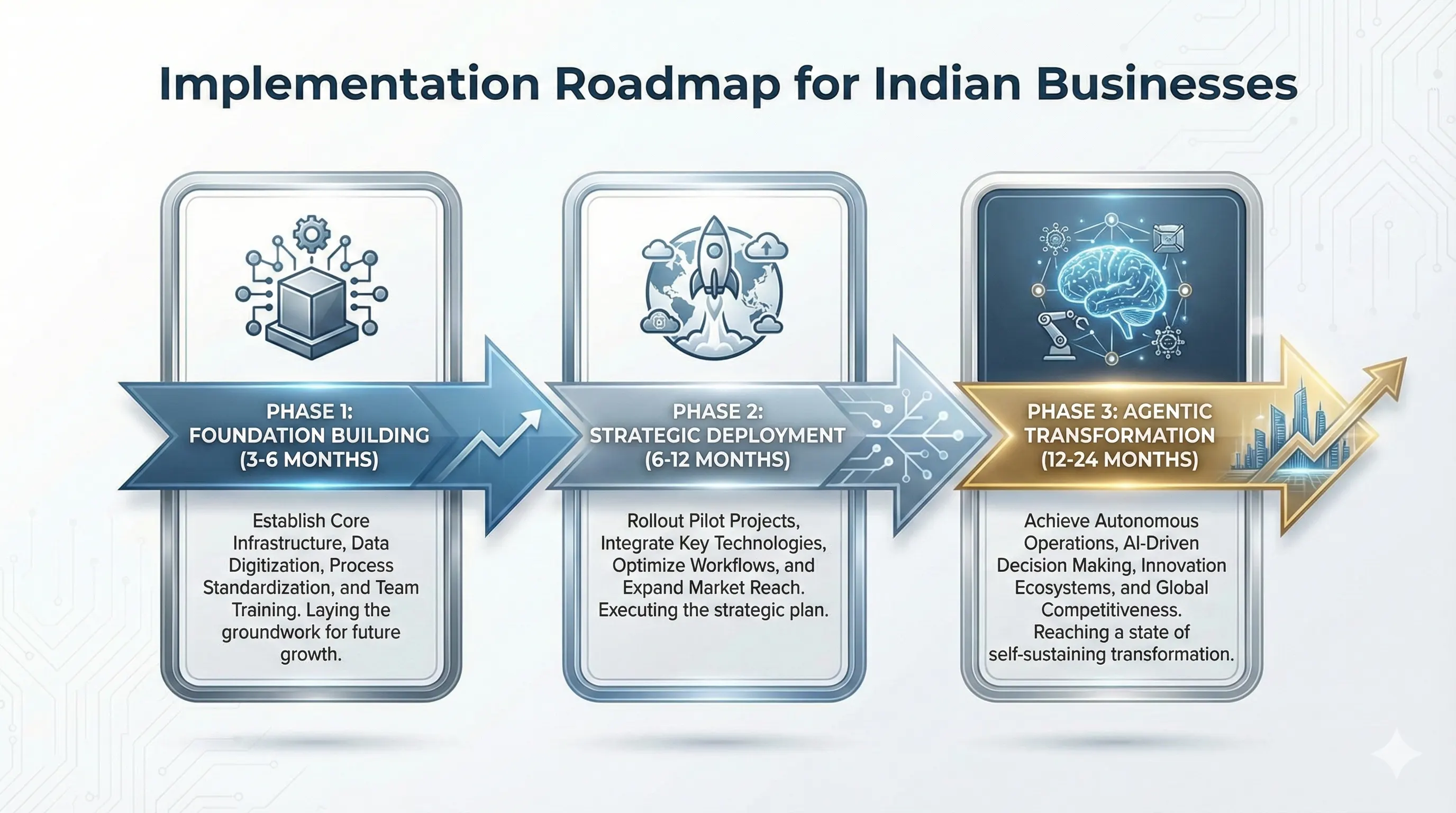
Establish AI readiness through assessing current capabilities, identifying high-value use cases, evaluating data readiness, defining success metrics, and securing executive sponsorship. Begin with AI agent pilot projects demonstrating value quickly while building momentum.
Scale successful pilots through expanding to additional use cases, integrating with core systems, establishing governance frameworks, building internal capabilities, and measuring business impact. Progress from simple AI agents to more sophisticated implementations.
Advance toward agentic AI for strategic processes including identifying transformation opportunities, designing agentic architectures, implementing with robust governance, monitoring and optimizing continuously, and scaling across organization. This phase requires organizational maturity and proven AI capabilities.
Secuodsoft, a CMMI Level 3 appraised AI-first solution company based in Bhubaneswar, Odisha, specializes in helping Indian businesses navigate AI agent vs agentic AI decisions through comprehensive AI development services . Our expertise spans both AI agent development for specific use cases and sophisticated agentic AI systems for strategic automation.
The AI agent vs agentic AI decision isn't binary, it's a journey. Most Indian businesses should begin with targeted AI agent implementations building capabilities, demonstrating value, and establishing foundations while keeping agentic AI as long-term strategic goal. This pragmatic approach manages risk, delivers incremental value, and positions organizations for transformative AI adoption.
Success requires understanding differences between approaches, honestly assessing organizational readiness, choosing appropriate starting points, investing in capabilities and infrastructure, and progressively advancing toward strategic automation. With India's AI market exploding and competition intensifying, businesses that navigate this journey effectively will establish sustainable advantages impossible for late adopters to overcome.
The future belongs to Indian businesses embracing AI strategically, and your choice of AI agents versus agentic AI, informed by business context, organizational capabilities, and strategic objectives, determines whether you lead that future or struggle catching up.
Copyright ©2026 Secuodsoft. All rights reserved.