India's $200+ billion logistics industry faces critical challenges, with 45% of logistics companies losing ₹10-50 lakhs annually due to inefficient route planning, poor inventory visibility, delayed deliveries, and manual documentation causing operational chaos that erodes profitability and customer satisfaction. Modern logistics management software has evolved from basic tracking systems to comprehensive platforms integrating transportation management, warehouse operations, fleet tracking, inventory control, and customer visibility, yet 60% of logistics companies struggle with inadequate technology, choosing wrong vendors, or underestimating implementation complexity, wasting ₹8-30 lakhs on systems failing to deliver promised efficiency gains. Whether you're operating a 3PL provider in Mumbai, a warehousing company in Gujarat, a freight forwarder in Chennai, or managing last-mile delivery across India, implementing the right transportation management system can transform operations delivering 30-50% cost reduction through route optimization, 40-60% improvement in delivery efficiency, 25-35% reduction in fuel costs, and 50-70% better inventory accuracy providing competitive advantage in India's rapidly evolving logistics landscape.
This comprehensive 2026 guide covers everything about logistics management software development, from essential features (fleet tracking, warehouse management, route optimization) and realistic pricing (₹5-40 lakhs based on complexity) to technology choices, implementation processes, and proven strategies maximizing ROI from your logistics technology investment.
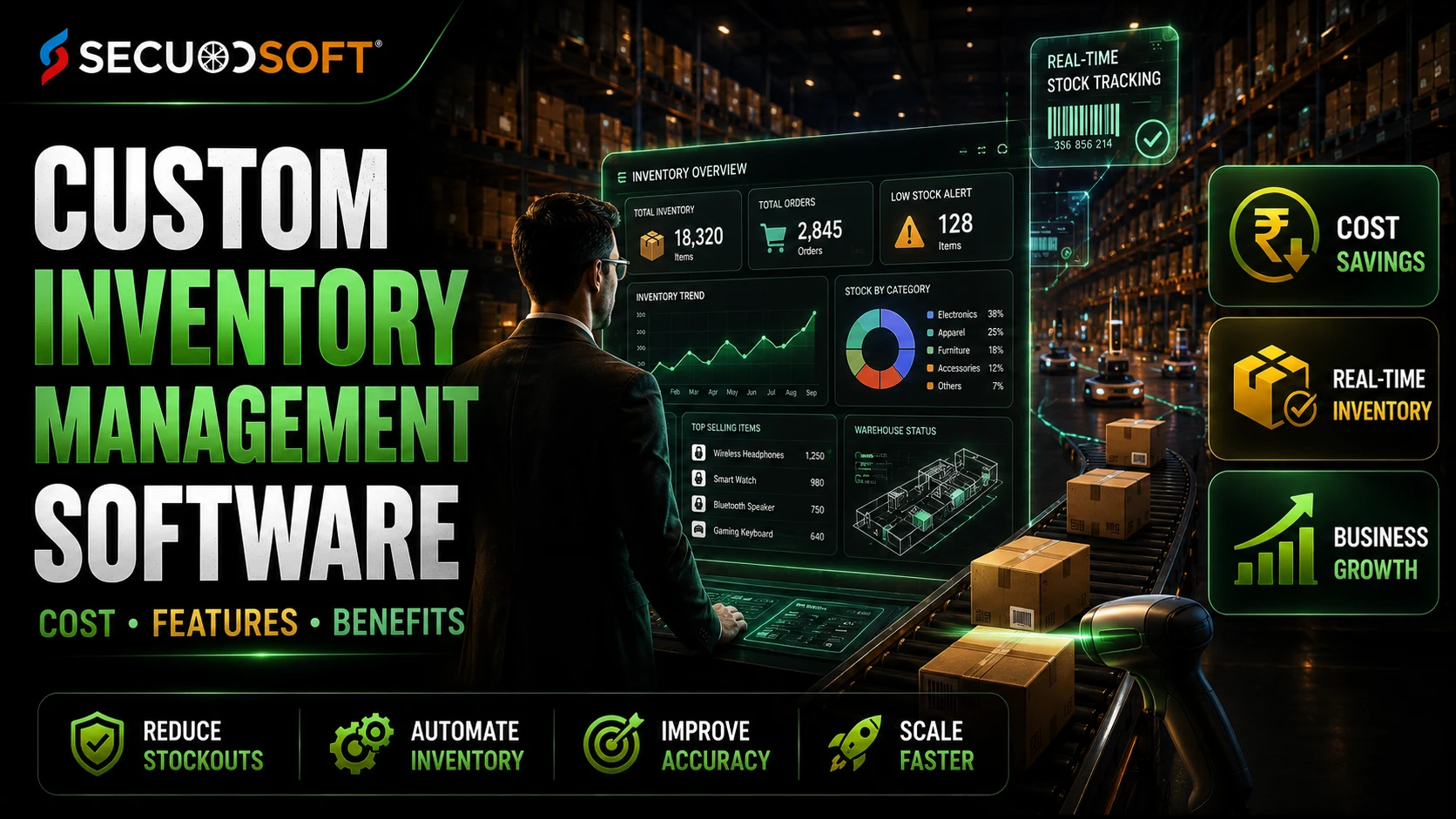
Logistics management software is a comprehensive digital platform integrating all aspects of supply chain and logistics operations, from order processing and inventory management to transportation, warehousing, tracking, and delivery, providing end-to-end visibility and control over the movement of goods from origin to destination.
Since logistics operations vary significantly between industries, businesses increasingly prefer custom web application development over generic software to ensure flexibility, scalability, and seamless integration with existing supply chain systems.
| Aspect | Manual Operations | Logistics Management Software |
|---|---|---|
| Order Processing | 2-3 hours, paper-based | 5-10 minutes, automated |
| Route Planning | Experience-based, suboptimal | AI-optimized, 20-30% fuel savings |
| Vehicle Tracking | Phone calls, no visibility | Real-time GPS tracking |
| Inventory Accuracy | 70-80% (manual counts) | 98%+ accuracy |
| Document Management | Paper-based, storage issues | Digital, instant access |
| Billing & Invoicing | 2-3 days processing | Real-time, automated |
| Customer Updates | Manual calls, delays | Automated notifications, tracking links |
| Cost | Hidden inefficiency costs | ₹5L-40L (saves 10-20x annually) |
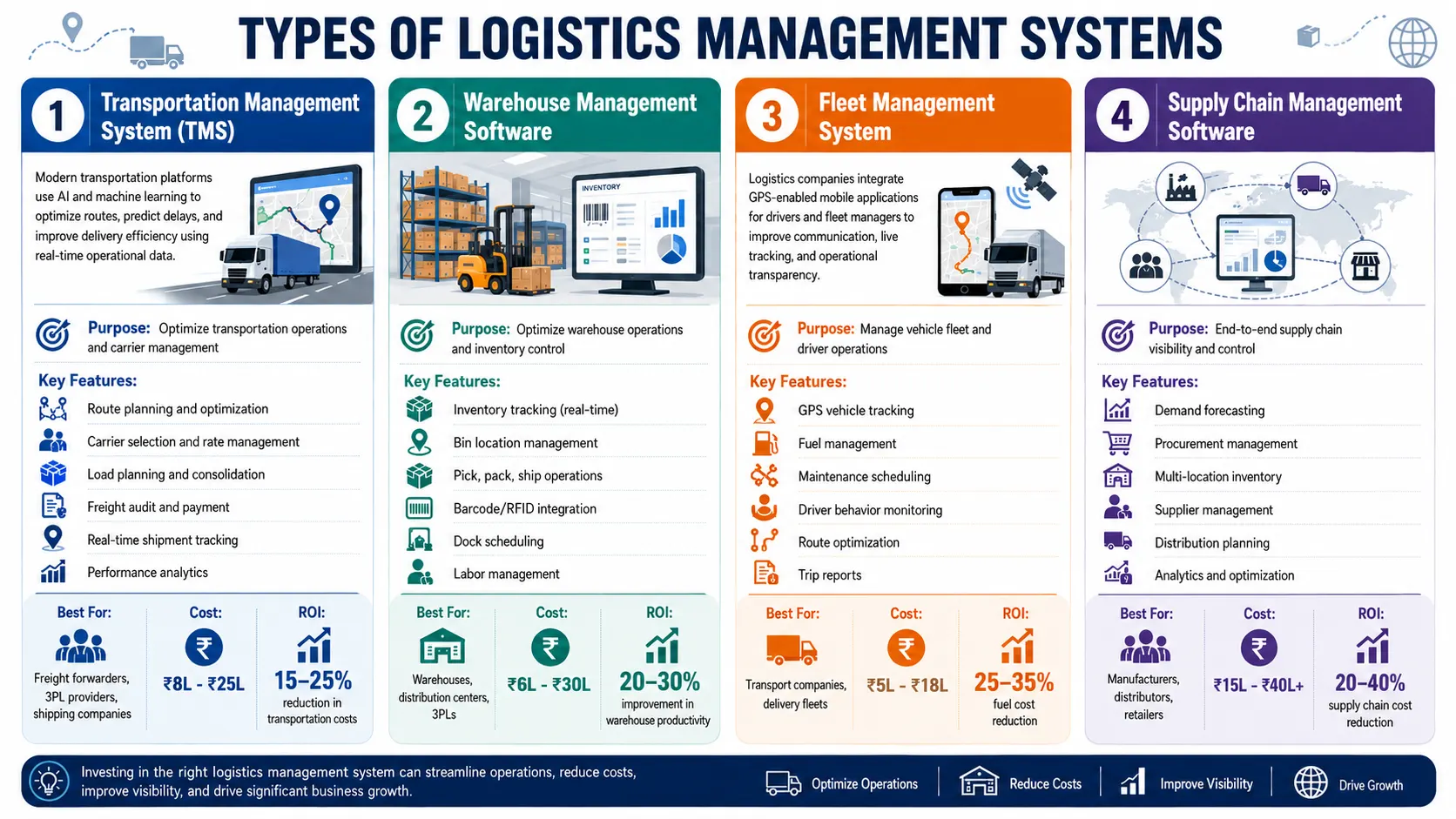
Modern transportation platforms are increasingly powered by AI & machine learning solutions that optimize routes, predict delays, and improve delivery efficiency using real-time operational data.
Purpose: Optimize transportation operations and carrier management
Best For: Freight forwarders, 3PL providers, shipping companies Cost: ₹8L - ₹25L ROI: 15-25% reduction in transportation costs
Purpose: Optimize warehouse operations and inventory control
Best For: Warehouses, distribution centers, 3PLs Cost: ₹6L - ₹30L ROI: 20-30% improvement in warehouse productivity
Many logistics companies are also integrating GPS-enabled mobile applications for drivers and fleet managers to improve communication, live tracking, and operational transparency.
Purpose: Manage vehicle fleet and driver operations
Best For: Transport companies, delivery fleets Cost: ₹5L - ₹18L ROI: 25-35% fuel cost reduction
Purpose: End-to-end supply chain visibility and control
Best For: Manufacturers, distributors, retailers Cost: ₹15L - ₹40L+ ROI: 20-40% supply chain cost reduction
Order Capture & Processing
Order Tracking
| Feature | Functionality | Business Impact |
|---|---|---|
| Route Optimization | AI-powered best route calculation | 20-30% fuel savings |
| Load Planning | Optimal vehicle utilization | 25-35% more loads per vehicle |
| Carrier Management | Rate comparison, performance tracking | 15-25% cost reduction |
| Freight Audit | Automated billing verification | 10-15% cost recovery |
| Document Management | Digital POD, invoices, LRs | 80% paperwork reduction |
Automated customer notifications through SMS and WhatsApp are becoming essential for modern logistics operations, helping businesses improve transparency and customer satisfaction.
| Integration Type | Purpose | Implementation Cost |
|---|---|---|
| E-commerce Platforms | Order import, inventory sync | ₹50K - ₹2.5L |
| ERP Systems | Financial, procurement integration | ₹1L - ₹5L |
| Marketplaces | Amazon, Flipkart order processing | ₹75K - ₹3L |
| Payment Gateways | Online payment collection | ₹40K - ₹1.5L |
| Accounting Software | Tally, QuickBooks sync | ₹60K - ₹2L |
| GPS Devices | Vehicle tracking hardware | ₹30K - ₹1L |
| Business Type | Basic Package | Standard Package | Enterprise Package |
|---|---|---|---|
| Small Transport (5-20 vehicles) | ₹5L - ₹10L | ₹10L - ₹15L | ₹15L - ₹20L |
| Medium Logistics (20-100 vehicles) | ₹10L - ₹18L | ₹18L - ₹28L | ₹28L - ₹40L |
| Large 3PL/Warehouse | ₹15L - ₹25L | ₹25L - ₹40L | ₹40L - ₹60L+ |
| Multi-Location Operations | ₹20L - ₹35L | ₹35L - ₹60L | ₹60L - ₹1Cr+ |
Cost: ₹75K - ₹6L
| Module | Cost Range |
|---|---|
| Order Management | ₹1.5L - ₹8L |
| Transportation Management | ₹2L - ₹12L |
| Warehouse Management | ₹2L - ₹10L |
| Fleet & GPS Tracking | ₹1.5L - ₹8L |
| Inventory Management | ₹1L - ₹6L |
| Billing & Finance | ₹1L - ₹5L |
| Reporting & Analytics | ₹1L - ₹6L |
Cost: ₹75K - ₹5L
Cost: ₹1L - ₹10L/year
Medium-Sized Logistics Company (50 vehicles, 2 warehouses)
| Component | Cost | Timeline |
|---|---|---|
| Planning & Design | ₹2L | 3 weeks |
| TMS Development | ₹6L | 8 weeks |
| WMS Development | ₹5L | 6 weeks |
| Fleet Tracking | ₹4L | 4 weeks |
| Mobile Apps (2) | ₹5L | 6 weeks |
| Integrations (3) | ₹2.5L | 4 weeks |
| Testing & QA | ₹2L | 3 weeks |
| Deployment & Training | ₹1.5L | 2 weeks |
| Total Development | ₹28L | 6 months |
| Hardware (GPS, devices) | ₹4L | - |
| Annual Maintenance | ₹5L | Ongoing |
Investment: ₹25 lakhs (medium logistics company)
ROI = (₹30L - ₹25L) / ₹25L × 100 = 20% Payback Period: 10 months 3-Year ROI: 260%
Secuodsoft is a trusted software development company delivering advanced logistics management software solutions tailored for transportation, warehousing, fleet management, and supply chain operations. With expertise in AI-driven automation, real-time tracking systems, cloud-based logistics platforms, and custom enterprise applications, we help logistics businesses streamline operations, reduce operational costs, and improve delivery efficiency through scalable and technology-driven solutions.
Logistics management software has become essential for Indian logistics companies seeking competitive advantage through operational efficiency, cost reduction, and superior customer service in 2026. Investing ₹5-40 lakhs in quality transportation management systems and warehouse management software delivers 20-30% cost savings, 30-50% efficiency improvements, and 10-month payback periods through optimized operations, real-time visibility, and data-driven decision-making. Success requires understanding essential features (fleet tracking, route optimization, warehouse management), realistic budgeting based on business size, choosing experienced developers who understand logistics complexities, and proper implementation with comprehensive training. Whether managing a small transport fleet, medium-sized warehouse, or large 3PL operation, partner with proven logistics software development companies like Secuodsoft who combine technical expertise with logistics domain knowledge, ensuring your investment transforms operations delivering measurable returns through improved efficiency, reduced costs, and enhanced customer satisfaction driving business growth.
Copyright ©2026 Secuodsoft. All rights reserved.