IoT App Development
Editorial Team
07 Jan 2026
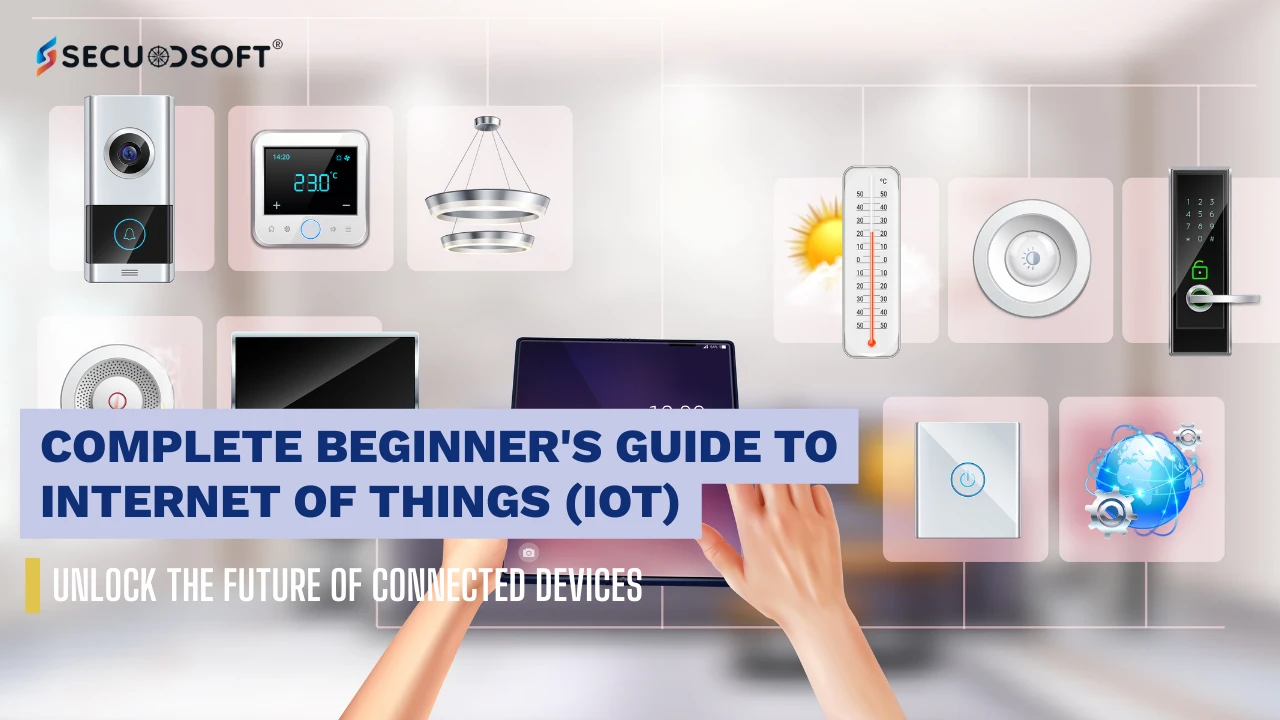
Companion app development has become a critical part of the modern IoT ecosystem. A smart device is no longer judged only by its hardware; users now expect a polished, intuitive mobile or web companion app that lets them control, monitor, and personalize their connected products. From smartwatches and fitness bands to home security systems, EV chargers, medical wearables, and industrial sensors, almost every IoT solution relies on a companion app as the primary touchpoint between humans and machines.
A well-designed companion app does far more than offer a remote control. It becomes the digital command center where users configure devices, receive alerts, view analytics, manage automation rules, update firmware, and connect with cloud services. For product companies, this app is also a strategic asset: it drives engagement, collects valuable usage data, supports subscriptions, and differentiates their brand in a crowded market.
This blog explains what a companion app is, explores its core capabilities, and walks through a practical, step-by-step approach to IoT app development for companion experiences.
What Is a Companion App?
A companion app is a mobile or web application that works in tandem with a physical device to extend its capabilities, improve usability, and provide a rich user interface. In the context of IoT app development, the companion app connects to smart devices via Bluetooth, Wi Fi, NFC, or the cloud, enabling users to set up, monitor, and control them from anywhere.
Unlike standalone apps, companion apps are tightly coupled with hardware. They often handle:
- Device onboarding (pairing, provisioning, and network configuration)
- Real-time data visualization (sensor readings, status indicators, logs)
- Remote control (turning devices on/off, changing modes, updating settings)
- Notifications and alerts (threshold breaches, faults, reminders)
- Over-the-air (OTA) firmware updates
- User accounts, access control, and sharing of devices among family or teams
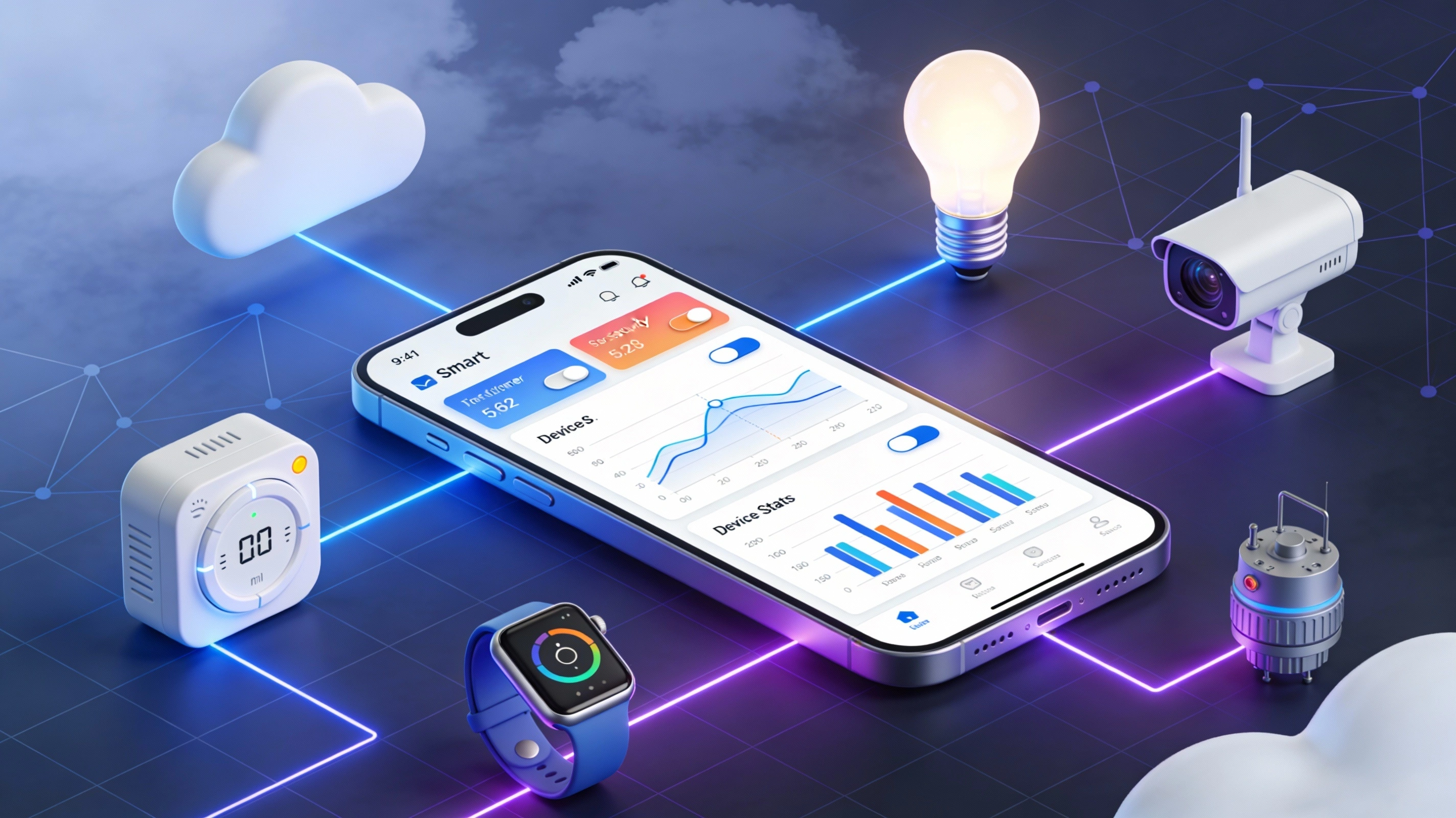
A fitness tracker app that shows heart rate trends, a smart thermostat app that lets you create schedules, or a smart lighting app that supports scenes and voice integration—each is an example of companion app development done for IoT products.
How to Develop an IoT Companion App (Steps)
Below is a structured, end-to-end approach to companion app development for smart IoT devices. You can adapt the depth of each step based on whether you are building a consumer, industrial, or enterprise solution.
1. Define Product Vision and Use Cases
Before writing a single line of code, clarify what role the companion app will play in the overall IoT solution.
- Identify primary users: Are they homeowners, technicians, doctors, facility managers, or operators on a factory floor? Each group has different expectations and technical comfort levels.
- Map core use cases:
- First-time setup and onboarding
- Day-to-day control (start/stop, mode changes, scheduling)
- Monitoring (live status, history, analytics)
- Alerts and notifications (safety, maintenance, reminders)
- Device sharing and access management
- Support and troubleshooting
- Decide what must be on-device vs. in-app vs. cloud: For example, critical safety functions might run directly on hardware, while advanced analytics and AI recommendations can live in the cloud and surface through the app.
Documenting use cases at this stage guides UX flows, architecture, and technology selection.
2. Choose Platforms and Technology Stack
Next, decide where and how your companion app will run. Platform choices directly affect cost, timeline, and user experience.
- Mobile platforms:
- Native Android (Kotlin/Java)
- Native iOS (Swift)
- Cross-platform (Flutter, React Native, Kotlin Multiplatform)
- Web or desktop companion:
- Progressive Web App (PWA) for browser access
- Electron or similar for desktop apps where needed
- Connectivity layer:
- Bluetooth Low Energy (BLE) for wearables and close-range devices
- Wi Fi for home appliances and cameras
- Ethernet, LTE/5G for industrial gateways
- MQTT, HTTP/REST, WebSockets, or CoAP for cloud communication
- Backend and cloud:
- IoT platforms like AWS IoT, Azure IoT, Google Cloud IoT, or custom backends
- Databases (SQL/NoSQL, time-series DB for sensor data)
- Authentication (OAuth2, JWT, SSO integration where needed)
For most consumer products, a combination of Bluetooth for local pairing and a cloud backend for remote access and data storage is common. Cross-platform frameworks like Flutter can accelerate companion app development while maintaining native-level performance and access to Bluetooth or Wi Fi APIs.
3. Design the User Experience (UX) Around the Device
UX is where many IoT products succeed or fail. A companion app must hide the complexity of IoT connectivity and make the experience feel simple and reliable.
Key UX considerations:
- Onboarding flow:
- Guided steps for pairing and Wi Fi setup (e.g., QR code scan, device hotspot, Bluetooth provisioning).
- Clear error messages and retry paths when pairing or network configuration fails.
- Home dashboard:
- At-a-glance device status and key controls.
- For multi-device users, an organized list or tiles grouped by location, type, or room.
- Detailed device view:
- Real-time values (temperature, energy consumption, health metrics, etc.).
- Controls grouped logically (modes, schedules, advanced settings).
- Alerts & notifications:
- Configurable thresholds and notification preferences.
- Clear, actionable messages (e.g., “Filter needs replacement” with action button).
- Accessibility and localization:
- Larger tap targets, dark/light modes, support for multiple languages.
Wireframes and interactive prototypes are extremely helpful. Test them with a small group of target users and incorporate feedback before locking the design.
4. Architect the IoT and Companion App Ecosystem
Companion app development does not happen in isolation. It should be aligned with your device firmware and cloud architecture from the start.
Typical architecture layers:
- Device layer: sensors, actuators, microcontroller (MCU) or SoC, connectivity module (BLE/Wi Fi/cellular).
- Gateway (optional): used in industrial or multi-device deployments to aggregate data.
- Cloud layer: device registry, message broker (MQTT), data storage, rules engine, analytics, and integrations with third-party services.
- App layer: mobile/web app, device management screens, dashboards, and notifications.
Key architectural decisions:
- Will the app communicate directly with the device (local mode) or primarily via the cloud, or both?
- How will devices be uniquely identified and registered (e.g., serial number + QR code)?
- What security model will you use (X.509 certificates, secure tokens, role-based access control)?
Early collaboration between firmware, backend, and app teams avoids rework later.
5. Implement Device Onboarding and Pairing
Device onboarding is often the first impression users get of your product, so it must be smooth.
Common patterns:
- Bluetooth provisioning:
- App discovers nearby devices via BLE.
- User selects the device, shares Wi Fi credentials securely to the device.
- Device connects to Wi Fi and cloud; app completes registration.
- Soft-AP (Wi Fi access point) method:
- Device broadcasts a temporary Wi Fi network.
- User connects to it, provides router credentials through the app.
- Device restarts and joins the home/office network.
Best practices:
- Provide clear visual cues and progress indicators.
- Timeout and retry mechanisms to handle disconnects.
- Use secure channels (e.g., TLS, key exchange) to avoid exposing Wi Fi credentials.
- Once onboarding is completed, associate the device with the user account and store metadata like location, name, and permissions.
6. Build Core Companion App Features
With connectivity in place, implement the features that make your companion app valuable. These typically fall into four categories: control, monitoring, configuration, and maintenance.
- Control and Automation
- On/off toggles, sliders, and preset modes.
- Scenes and routines (e.g., “Good Night,” “Away Mode”).
- Integration with voice assistants where relevant.
- Monitoring and Analytics
- Live data streams (e.g., temperature, energy, heart rate).
- Historical charts and trends.
- Health indicators (battery level, signal strength, uptime).
- Configuration Management
- Device name, firmware version, region, and time zone.
- User preferences like units, thresholds, notification rules.
- Sharing controls: who else can view or control the device.
- Maintenance and Support
- One-tap diagnostics or “Run Health Check.”
- Troubleshooting tips and FAQs contextual to error codes.
- Direct link to support or ticket creation from within the app.
Throughout development, keep performance in mind—users expect near real-time responses from their smart devices. Caching, efficient polling intervals, and WebSockets/MQTT for push updates help achieve that.
7. Integrate Security and Privacy from Day One
Security is non-negotiable in IoT app development. Companion apps often control devices in sensitive contexts (homes, factories, healthcare) and handle personal data.
Best practices:
- Secure communication:
- Use TLS for all traffic between app, cloud, and device (where feasible).
- Avoid transmitting passwords in plaintext; use tokens and standard auth flows.
- Strong authentication and access control:
- Enforce secure login (password policy, MFA/OTP, biometrics).
- Implement role-based permissions for shared devices (owner, guest, admin).
- Data protection:
- Encrypt sensitive data at rest in the cloud and on-device if stored locally.
- Provide clear privacy settings and allow users to control data-sharing.
- Secure OTA firmware updates:
- Sign firmware packages and verify signatures before installation.
- Provide rollback mechanisms if updates fail.
Proactive security measures protect users and your brand, and they make your companion app development strategy compliant with evolving regulations.
8. Test with Real Devices and Real Users
Testing IoT companion apps is more complex than regular app testing because hardware, networks, and environments vary widely.
Plan for:
- Functional testing: Validate all UI flows, device commands, data updates, and error handling.
- Connectivity testing:
- Vary Wi Fi strength, switch networks, and simulate offline scenarios.
- Test different Bluetooth versions, phones, and OS versions.
- Performance and scalability:
- Measure response times from command to device action.
- Load-test cloud components for thousands of devices and concurrent users.
- Usability testing: Observe how non-technical users onboard devices and interact with controls. Use their feedback to simplify flows and wording.
- Security testing: Conduct vulnerability assessments and, for critical systems, penetration testing.
Real-world pilots with a limited group of users can surface issues that lab testing misses, especially around network reliability and environment-specific edge cases.
9. Plan Deployment, Support, and Continuous Improvement
Launching the companion app is just the beginning. A strong post-launch strategy turns early adopters into loyal users.
- Deployment:
- Publish mobile apps on targeted stores (Google Play, App Store, enterprise distribution).
- Offer clear release notes and quick-start guides.
- Support:
- Provide in-app support options: help center, chat, or ticket system.
- Monitor crash reports and performance metrics.
- Analytics and feedback loops:
- Track key metrics like active users, retention, feature usage, and failure rates.
- Collect feedback via in-app surveys or NPS prompts.
- Iterative updates:
- Prioritize improvements based on usage data and customer feedback.
- Release regular updates that refine UX, add features, and enhance security.
Companion app development is an ongoing process—your app should evolve along with firmware, new device models, and changing user expectations.
Real-World Use Cases of IoT Companion Apps Across Industry
Real-world IoT companion apps power a wide range of industry-specific scenarios, turning connected hardware into actionable intelligence.
Healthcare
In healthcare, IoT companion apps connect to medical wearables and remote monitoring devices such as glucose meters, ECG patches, and blood pressure cuffs. Patients can track their vitals in real time, while clinicians remotely review trends, receive alerts for abnormal readings, and intervene early, improving outcomes and reducing hospital readmissions.
Agriculture
In agriculture, companion apps pair with soil moisture sensors, weather stations, and smart irrigation controllers. Farmers use these apps to monitor field conditions, schedule precise irrigation, and optimize fertilizer use, which boosts crop yield, conserves water, and lowers operational costs.
Manufacturing
In manufacturing, IoT apps are linked to machines and industrial sensors that monitor vibration, temperature, and energy consumption. Maintenance teams receive instant alerts when anomalies occur, allowing predictive maintenance instead of costly unplanned downtime and enabling better production planning.
Logistics & Fleet Management
For logistics, companion apps integrate with GPS trackers and telematics devices installed in vehicles. Fleet managers track live location, route progress, fuel usage, and driver behavior, helping them optimize routes, improve safety, and ensure on-time deliveries.
Smart Buildings & Facilities
In smart buildings, mobile and web apps connect to HVAC systems, lighting, access control, and environmental sensors. Facility managers use a single dashboard to adjust settings, automate schedules, monitor occupancy and energy consumption, and quickly respond to alarms or faults.
Power Your Smart Devices with a Future Ready Companion App
Take your smart device from hardware concept to a complete connected experience with Secuodsoft’s companion app development expertise. As an AI first, CMMI Level 3 appraised technology partner, Secuodsoft designs and builds secure, scalable IoT apps that seamlessly connect mobiles, cloud platforms, and smart devices to deliver real-time control, analytics, and automation. Whether you are launching a new wearable, smart home product, or industrial solution, Secuodsoft’s end to end services—covering UX, firmware integration, cloud backend, and ongoing support—help you accelerate time to market and deliver a polished, future ready companion app that your users will love. Reach out to Secuodsoft today to turn your IoT product vision into a powerful connected ecosystem.
Conclusion
Companion app development lies at the heart of successful IoT products. A smart device on its own has limited value; the real magic happens when users can intuitively control, monitor, and personalize it through a thoughtfully designed companion app. By clearly defining use cases, choosing the right tech stack, designing user-centric experiences, architecting secure connectivity, and rigorously testing across devices and networks, you can create an IoT companion app that delights users and strengthens your product ecosystem.
As you plan your next IoT app development project, treat the companion app not as an add on, but as a core component of your solution and brand. Done well, it becomes the primary channel for engagement, data-driven insights, and long-term customer relationships—turning smart hardware into a complete, future-ready digital experience.
Frequently Asked Questions (FAQ)
A companion app in IoT is a mobile or web application that connects to a smart device (via Bluetooth, Wi Fi or cloud) to handle setup, control, monitoring, updates, and personalization of that device.
Companion app development is crucial because it becomes the main interface users interact with, turning raw device capabilities into intuitive experiences, driving engagement, analytics, subscriptions, and long term customer loyalty.
Most IoT companion apps use native Android (Kotlin/Java) or iOS (Swift) or cross platform frameworks like Flutter/React Native, combined with BLE or Wi Fi for device connectivity and a cloud backend using MQTT/HTTP APIs for remote control and data storage.
A basic IoT companion app can take 3–4 months, while a feature rich, cloud integrated solution with analytics, automation, and OTA updates may require 6–12 months depending on complexity, platform count, and integration needs.
Core features include easy device onboarding, real time status and control, historical data and dashboards, configurable alerts, user accounts and sharing, secure communication, and in app support or troubleshooting.
Security relies on encrypted communication (TLS), strong authentication and authorization, secure device provisioning, signed OTA firmware updates, least privilege access to APIs, and safe storage of credentials and sensitive data.
Not always. Local-only control via Bluetooth or local Wi Fi is possible, but a cloud backend is recommended when you need remote access, data history, analytics, multi user access, or integrations with third party platforms.