Software Development
Editorial Team
06 May 2026
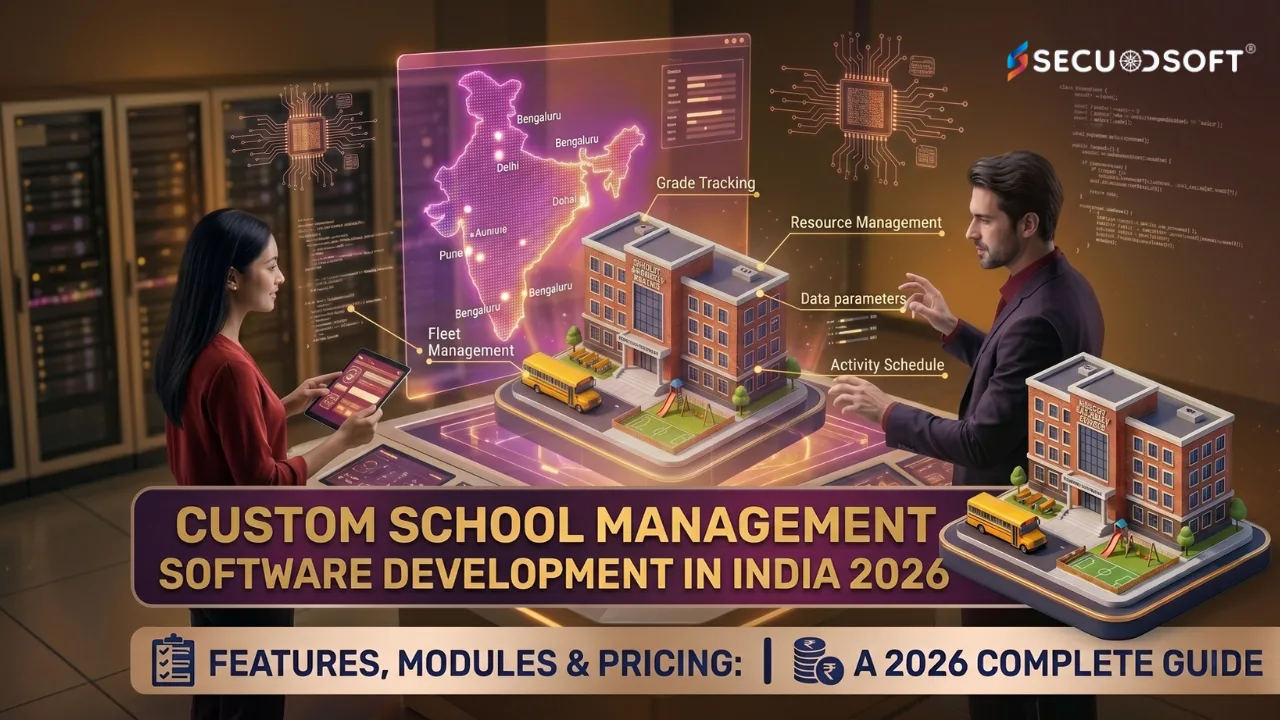
Indian schools managing 250+ million students face mounting operational challenges, with 58% of educational institutions still using manual processes or outdated systems leading to attendance errors, fee collection delays, parent communication gaps, and administrative inefficiencies costing schools ₹3-10 lakhs annually in lost time and resources. Modern school management software has evolved from simple attendance tracking to comprehensive platforms integrating student information systems, online learning, fee management, parent communication, and performance analytics, yet 62% of schools choose inadequate solutions due to poor vendor selection or unrealistic budgets, wasting ₹5-20 lakhs on systems that don't meet educational needs. Whether you're operating a CBSE school in Delhi, an ICSE institution in Mumbai, a state board school in Tamil Nadu, or managing multiple campuses across India, implementing the right school ERP software can transform operations delivering 40-60% administrative efficiency gains, improving parent engagement by 70%, reducing fee collection time by 50%, and enhancing academic outcomes through data-driven insights.
This comprehensive 2026 guide covers everything about school management software development, from essential features (student information systems, online learning integration, fee management) and realistic pricing (₹3-25 lakhs based on school size) to implementation processes and proven strategies for maximizing ROI from your educational technology investment.
Understanding School Management Software
What is School Management Software?
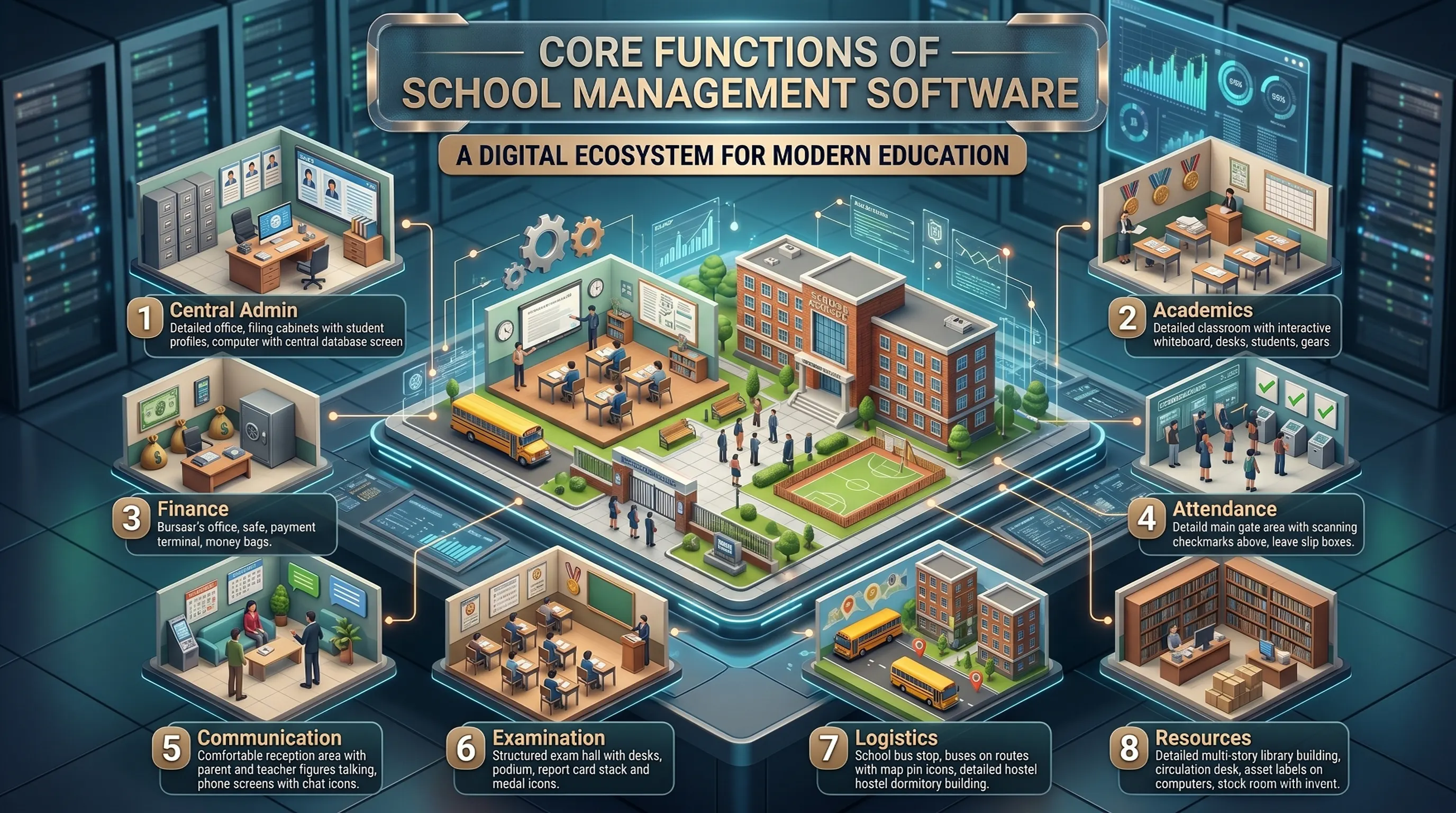
School management software (also called school ERP software or education management software) is a comprehensive digital platform integrating all aspects of school operations, from student admissions and attendance to academics, fee management, parent communication, and administrative tasks, into a unified system eliminating manual processes and providing real-time visibility across the institution.
Since every institution has unique processes, many schools now prefer custom web application development instead of generic ready-made systems. This allows seamless control over admissions, academics, fee workflows, reporting structures, and future scalability.
Core Functions
- Student information management
- Academic and curriculum planning
- Fee collection and accounting
- Attendance and leave tracking
- Parent-teacher communication
- Examination and result management
- Transport and hostel management
- Library and inventory management
School Management Software vs Manual Systems
| Aspect |
Manual Systems |
School Management Software |
| Attendance |
Paper registers, 30 min/day |
Digital, 5 min/day (85% time saved) |
| Fee Collection |
Manual receipts, follow-ups |
Online payments, auto-reminders |
| Report Cards |
Manual preparation, 2 weeks |
Auto-generated, instant |
| Parent Communication |
Phone calls, meetings |
SMS, app notifications, portal |
| Data Accuracy |
15-20% error rate |
99%+ accuracy |
| Administrative Time |
8-10 hours/day |
3-4 hours/day (60% saved) |
| Cost |
₹0 initial (high hidden costs) |
₹3L-25L (saves 5-10x annually) |
Essential Features of School Management Software
1. Student Information System
Schools with growing student strength often require scalable education ERP software solutions that centralize records, automate workflows, and improve collaboration across departments.
Core Student Management
Admission & Enrollment
- Online admission application
- Document upload and verification
- Automated enrollment process
- Student ID generation
- Class and section allocation
Student Profile Management
- Complete student database
- Academic history
- Medical records
- Family information
- Emergency contacts
- Photo and documents
Attendance Management
- Digital attendance marking
- Biometric/RFID integration
- Real-time parent notifications
- Leave applications
- Attendance reports and analytics
2. Academic Management
Curriculum & Learning:
| Feature |
Description |
Benefit |
| Timetable Management |
Automated scheduling, conflict detection |
70% faster timetable creation |
| Lesson Planning |
Teacher lesson plans, resource sharing |
Curriculum alignment |
| Online Assignments |
Digital homework submission |
Paperless, tracked submissions |
| Gradebook |
Continuous assessment tracking |
Real-time performance visibility |
| Learning Resources |
Digital content library |
Enhanced learning materials |
3. Examination & Results
Assessment Management
Exam Scheduling
- Exam calendar creation
- Hall allocation
- Invigilator assignment
- Conflict management
Marks Entry & Processing
- Online marks entry
- Grade calculation (CGPA, percentages)
- Rank generation
- Result analysis
Report Cards
- Automated report card generation
- Digital and printable formats
- Parent portal access
- Historical performance tracking
4. Fee Management System
Financial Operations
Fee Collection
- Online payment integration (UPI, cards, wallets)
- Multiple fee types (tuition, transport, hostel)
- Installment management
- Late fee calculation
- Fee receipts and invoices
Financial Management
- Fee collection tracking
- Defaulter reports
- Expense management
- Accounting integration
- GST compliance
- Financial reports
5. Parent-Teacher Communication
To improve engagement, many institutions are also investing in mobile app development for dedicated parent apps offering attendance alerts, fee reminders, academic updates, and secure messaging.
Engagement Platform
Mobile App for Parents
- Real-time attendance updates
- Academic performance tracking
- Fee payment and receipts
- School announcements
- Event calendar
- Direct messaging with teachers
Communication Channels
- SMS notifications
- Email alerts
- Push notifications
- Circular distribution
- Photo/video sharing
- Parent-teacher meeting scheduling
6. Staff & HR Management
Employee Operations
- Staff database with qualifications
- Attendance and leave management
- Payroll processing
- Performance appraisals
- Training and development tracking
- Role-based access control
7. Transport Management
Fleet Operations
- Vehicle and route management
- GPS tracking integration
- Student transport allocation
- Driver and helper management
- Trip scheduling
- Transport fee management
- Parent live tracking
8. Library Management
Resource Management
- Book cataloging and RFID tagging
- Issue and return tracking
- Digital library access
- Fine management
- Inventory management
- Reading analytics
9. Hostel Management
Residential Operations
- Room and bed allocation
- Attendance tracking
- Mess management
- Visitor management
- Hostel fee management
- Complaint management
10. Reporting & Analytics
Advanced institutions are increasingly using AI-powered analytics solutions to identify struggling students early, predict admission trends, and improve operational planning through data intelligence.
Data-Driven Insights
Academic Reports
- Student performance analytics
- Class-wise comparisons
- Subject-wise analysis
- Attendance trends
- Pass percentage tracking
Administrative Reports
- Fee collection status
- Student strength reports
- Staff attendance
- Financial summaries
- Custom report builder
School Management Software Development Cost
Pricing by School Size
| School Size |
Basic Package |
Standard Package |
Advanced Package |
| Small (up to 500 students) |
₹3L - ₹6L |
₹6L - ₹10L |
₹10L - ₹15L |
| Medium (500-2000 students) |
₹6L - ₹12L |
₹12L - ₹18L |
₹18L - ₹25L |
| Large (2000+ students) |
₹12L - ₹20L |
₹20L - ₹30L |
₹30L - ₹50L+ |
| Multi-Campus |
₹15L - ₹25L |
₹25L - ₹40L |
₹40L - ₹75L+ |
Detailed Cost Breakdown
1. Planning & Design (15-20%)
Cost: ₹50K - ₹8L
- Requirements gathering
- Workflow analysis
- UI/UX design
- Architecture planning
2. Core Development (40-50%)
| Module |
Cost Range |
| Student Information System |
₹1.5L - ₹8L |
| Academic Management |
₹1L - ₹6L |
| Fee Management |
₹75K - ₹5L |
| Examination System |
₹1L - ₹6L |
| Attendance Management |
₹50K - ₹3L |
| Parent Communication |
₹75K - ₹4L |
| HR & Payroll |
₹1L - ₹5L |
| Transport Management |
₹75K - ₹4L |
| Library Management |
₹50K - ₹3L |
| Reporting & Analytics |
₹75K - ₹5L |
3. Mobile Apps (15-20%)
- Parent Mobile App: ₹2L - ₹8L
- Teacher App: ₹1.5L - ₹6L
- Student App (optional): ₹1.5L - ₹6L
4. Integrations (10-15%)
- Payment Gateways: ₹40K - ₹2L
- SMS/Email Gateway: ₹30K - ₹1.5L
- Biometric Devices: ₹50K - ₹2L
- GPS Tracking: ₹60K - ₹2.5L
- Learning Management System: ₹1L - ₹5L
5. Testing & Deployment (10-15%)
Cost: ₹50K - ₹4L
- Quality assurance
- User acceptance testing
- Data migration
- Staff training
- Documentation
6. Annual Maintenance (15-20% of development cost)
Cost: ₹60K - ₹8L/year
- Bug fixes and updates
- Technical support
- Server maintenance
- Feature enhancements
- Security updates
Cost Optimization Tips
How to Reduce Development Cost:
1. Start with Essential Modules
- Launch with student management, fee collection, attendance
- Add advanced features in phases
- Savings: 40-50% on initial investment
2. Use Cloud Deployment
Reliable cloud infrastructure solutions help schools reduce upfront hardware investment while ensuring secure access, backups, and smooth performance during peak usage periods.
- No server infrastructure cost
- Scalable as per needs
- Savings: ₹2-8 lakhs on hardware
3. Choose Standard Features First
- Avoid extensive customization initially
- Customize based on usage feedback
- Savings: 30-40% on development time
4. Gradual Mobile App Development
- Start with parent app (most critical)
- Add teacher/student apps later
- Savings: ₹2-6 lakhs initially
Benefits & ROI of School Management Software
Expected Benefits
Administrative Efficiency:
- 60% reduction in administrative time
- 85% decrease in paperwork
- 99% accuracy in data management
- Real-time operational visibility
Financial Impact:
- 50% faster fee collection
- 15-25% increase in collection rates
- Reduced payment follow-up time by 70%
- 20-30% reduction in accounting errors
Parent Engagement:
- 70% increase in parent satisfaction
- 90% reduction in phone inquiries
- Real-time communication
- Better home-school connection
Academic Improvement:
- Data-driven teaching strategies
- Early intervention for struggling students
- Performance trend analysis
- 15-20% improvement in academic outcomes
ROI Calculation
Investment: ₹12 lakhs (medium school)
Annual Savings & Benefits:
- Administrative time saved: ₹5L (2 staff positions)
- Improved fee collection: ₹3L (better collection rate)
- Reduced paperwork & printing: ₹1L
- Enhanced reputation & admissions: ₹4L
- Total Annual Benefit: ₹13L
ROI = (₹13L - ₹12L) / ₹12L × 100 = 8% Payback Period: 11 months 3-Year ROI: 225%
Implementation Process
Phase 1: Planning (2-3 weeks)
- School requirements analysis
- Current system evaluation
- Feature prioritization
- Budget allocation
- Timeline planning
Phase 2: Design (2-3 weeks)
- User interface design
- Workflow mapping
- Database architecture
- Integration planning
Phase 3: Development (10-16 weeks)
Partnering with an experienced software development company ensures faster delivery, better architecture planning, and long-term scalability for educational institutions.
- Module-wise development
- Integration implementation
- Mobile app development
- Testing throughout
Phase 4: Testing (2-4 weeks)
- Functional testing
- Performance testing
- User acceptance testing
- Bug fixing
Phase 5: Deployment (2-3 weeks)
- Data migration
- Staff training (all departments)
- Soft launch with pilot group
- Full rollout
- Post-launch support
Phase 6: Ongoing Support
- Technical support helpdesk
- Regular updates
- Feature enhancements
- Performance monitoring
Why Choose Secuodsoft for School Management Software
Secuodsoft, a CMMI Level 3 appraised company, delivers comprehensive school management software development services tailored for Indian educational institutions. Our expertise includes student ERP systems, fee management platforms, parent mobile apps, cloud deployment, and scalable education technology solutions.
Conclusion
School management software in 2026 has become essential for Indian educational institutions seeking operational efficiency, improved parent engagement, and enhanced academic outcomes. Investing ₹3-25 lakhs in quality school ERP software delivers 60% administrative efficiency gains, 50% faster fee collection, and 70% improved parent satisfaction, with typical 11-month payback periods. Success requires understanding essential features (student information systems, academic management, fee collection, parent communication), realistic budgeting based on school size, choosing experienced developers who understand Indian education systems, and proper implementation with comprehensive staff training. Whether managing a small school, large institution, or multi-campus organization, partner with proven school software development companies like Secuodsoft who combine technical expertise with education domain knowledge, ensuring your investment transforms school operations while delivering measurable returns through improved efficiency, parent satisfaction, and academic excellence.
Frequently Asked Questions (FAQ)
School management software cost in India ranges from ₹3 lakhs to ₹50 lakhs+ depending on school size and features. Small schools (up to 500 students) need basic systems costing ₹3-10 lakhs covering student management, attendance, fee collection, and parent communication. Medium schools (500-2000 students) require comprehensive platforms ranging ₹6-25 lakhs including academic management, examinations, mobile apps, and advanced reporting. Large schools (2000+ students) need enterprise systems costing ₹12-35 lakhs with complete functionality and scalability. Multi-campus institutions require ₹25 lakhs+ for centralized management across locations. Cost components include planning and design (15-20%), core development (40-50%), mobile apps (15-20%), integrations (10-15%), testing and deployment (10-15%), plus annual maintenance (15-20% of development cost). Cloud-based deployment reduces infrastructure costs by ₹2-8 lakhs. Starting with essential modules and adding features in phases optimizes initial investment while delivering early benefits.
Essential school management software features include student information system (admissions, enrollment, profile management, attendance tracking, leave applications), academic management (timetable creation, lesson planning, assignment management, gradebook, curriculum tracking), examination and results (exam scheduling, marks entry, automated report cards, performance analytics), fee management (online payment integration, multiple fee types, installment management, receipts, defaulter tracking, accounting), parent-teacher communication (mobile app for parents, real-time notifications, attendance alerts, performance updates, direct messaging, circular distribution), staff management (employee database, attendance, leave, payroll, performance tracking), and reporting and analytics (academic reports, financial summaries, attendance trends, custom reports). Additional valuable features include transport management with GPS tracking, library management with RFID, hostel management, biometric integration for attendance, learning management system integration, SMS/email automation, and role-based access control. Feature prioritization depends on school needs, small schools focus on core student management and fee collection; larger institutions need complete functionality including transport, hostel, and multi-location management.
School management software implementation takes 2-12 months depending on school size and features. Small school basic systems require 2-3 months including planning (2 weeks), design (2 weeks), development (6-8 weeks), testing (2 weeks), training (1 week), and deployment (1 week). Medium school comprehensive platforms need 3-5 months with detailed planning (3 weeks), design (3 weeks), modular development (10-14 weeks), testing (3 weeks), and phased deployment (2 weeks). Large enterprise systems take 5-8 months covering extensive requirements (4 weeks), architecture (3 weeks), complex development (16-24 weeks), rigorous testing (4 weeks), and careful rollout (3 weeks). Multi-campus solutions require 6-12 months for development, integration, and sequential campus deployments. Timeline factors include feature scope (more modules extend timeline), data migration from existing systems (adds 2-4 weeks), custom feature development, integration complexity (biometric, GPS, LMS), team availability for training, and school academic calendar (prefer deployment during vacations). Best practice recommends starting implementation 4-6 months before intended launch, allowing adequate time for development, testing, staff training, and addressing issues before full-scale rollout.
Yes, modern school management software supports extensive integration with existing systems and devices. Common integrations include biometric attendance devices (fingerprint, face recognition) for automated student/staff attendance tracking, RFID systems for library book management and student identification cards, GPS tracking devices for school bus monitoring and parent live tracking, payment gateways (Razorpay, PayU, Paytm, bank portals) for online fee collection, SMS gateways for automated parent notifications and alerts, email systems for communication and circular distribution, accounting software (Tally, QuickBooks) for financial data synchronization, learning management systems (Moodle, Google Classroom) for online education integration, existing school website for information sharing, and government portals for reporting and compliance. Integration approach typically uses APIs (application programming interfaces) connecting systems, middleware for data exchange, webhooks for real-time updates, and scheduled synchronization for batch processing. Implementation considerations include verifying vendor provides integration capabilities before purchase, discussing specific integration requirements during planning, budgeting for integration development (₹30K-₹2L per integration), testing thoroughly before production use, and ensuring ongoing maintenance as integrated systems update. Partner with experienced developers who have proven integration expertise ensuring seamless connectivity with your existing educational technology infrastructure.
School management software ROI typically achieves 150-250% returns within 3 years with 11-18 month payback periods. Tangible financial benefits include administrative time savings (60% reduction worth ₹3-8 lakhs annually through reduced manual work, paperwork, and staff time), improved fee collection (15-25% increase in collection rates, 50% faster collection worth ₹2-5 lakhs annually from reduced defaults and better tracking), reduced operational costs (₹1-3 lakhs annually from paperless operations, automated processes, less printing), and avoided hiring costs (₹2-5 lakhs annually by managing more students with existing staff). Intangible benefits include 70% improved parent satisfaction increasing word-of-mouth referrals, enhanced school reputation attracting more admissions, better academic outcomes through data-driven teaching (15-20% performance improvement), reduced parent inquiries (90% decrease in phone calls, 80% time saved), improved teacher productivity through streamlined processes, and better decision-making through real-time analytics. Example calculation for 1000-student school: ₹12 lakh investment delivers ₹5L administrative savings, ₹3L improved collections, ₹1L operational cost reduction, ₹4L from additional admissions (enhanced reputation) = ₹13L annual benefit = 8% first-year ROI, 125% three-year ROI. Schools report payback within 11-18 months, with continued benefits growing as adoption deepens and features expand. Larger schools and multi-campus institutions achieve faster ROI due to economies of scale.